
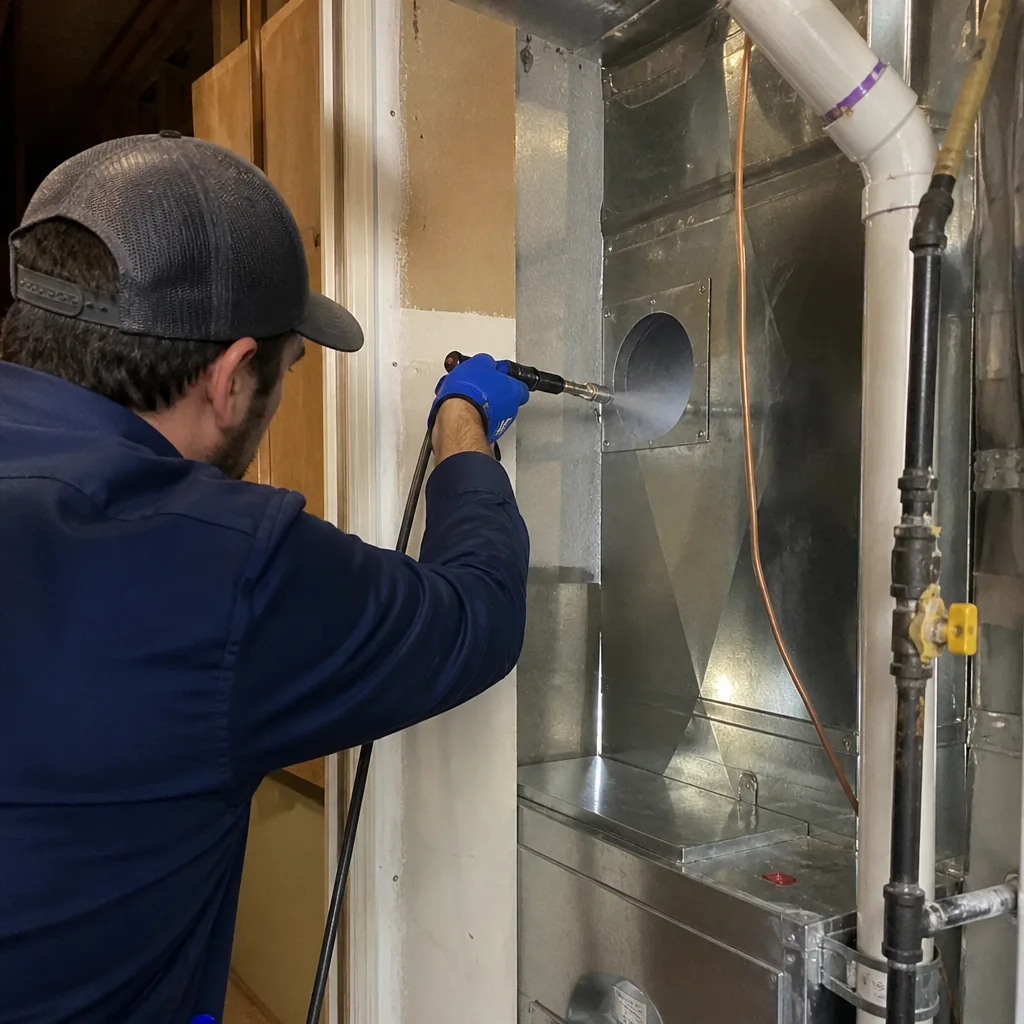
Last updated November 23, 2026
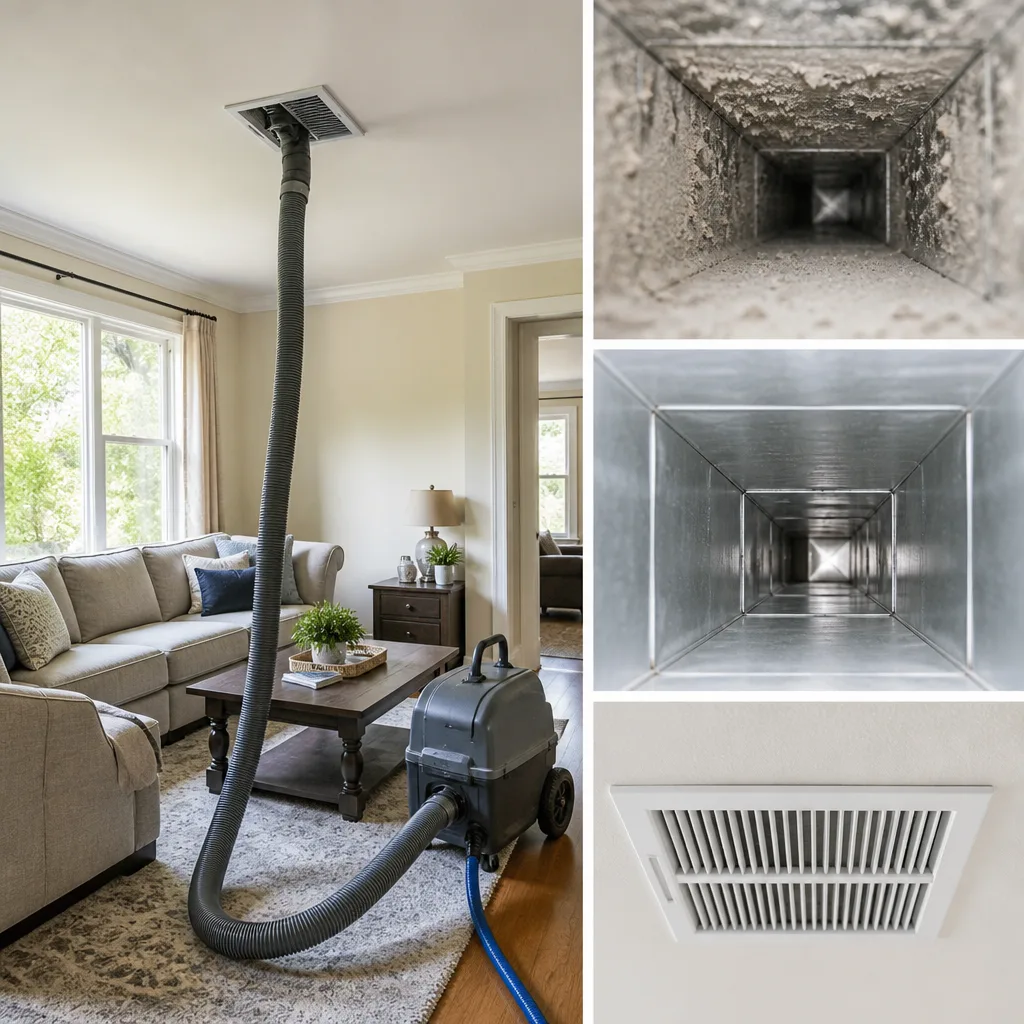 Whole-home duct cleaning
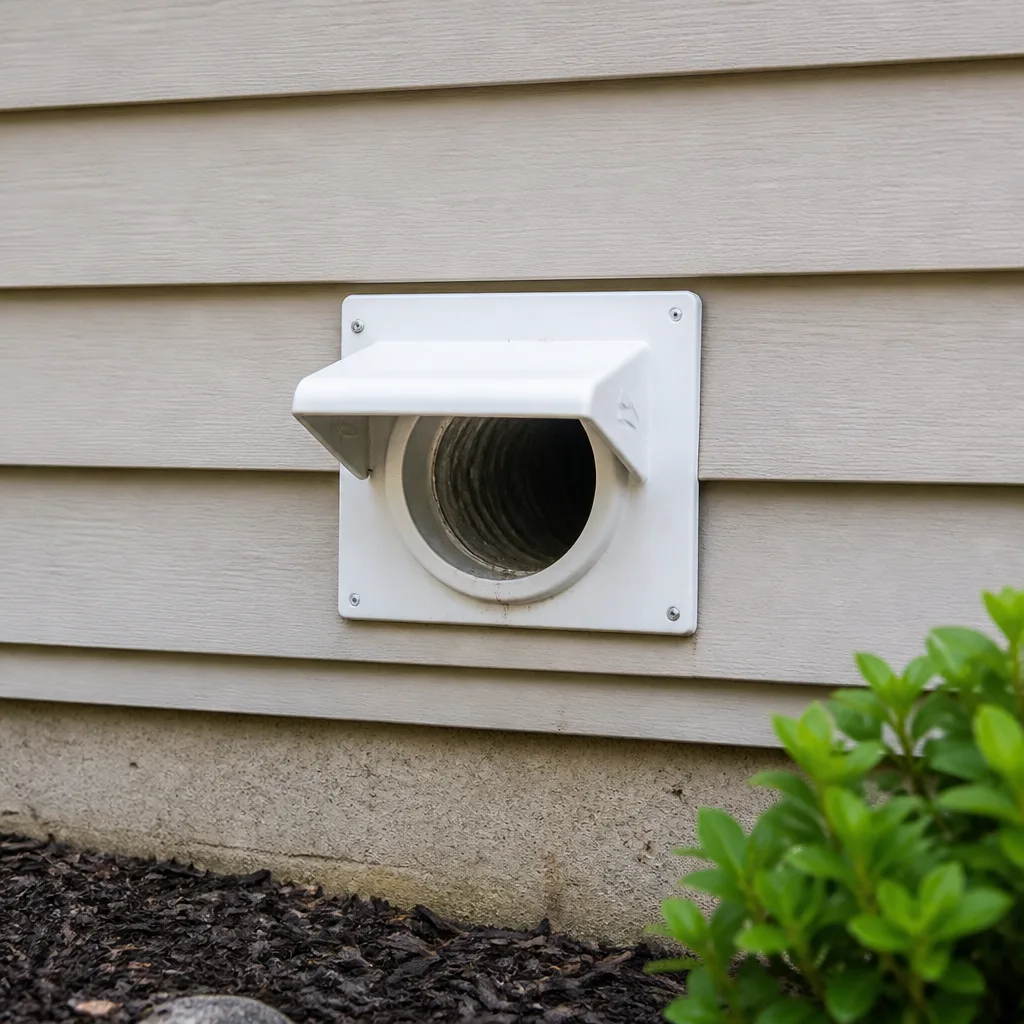 Dryer vent cleaning
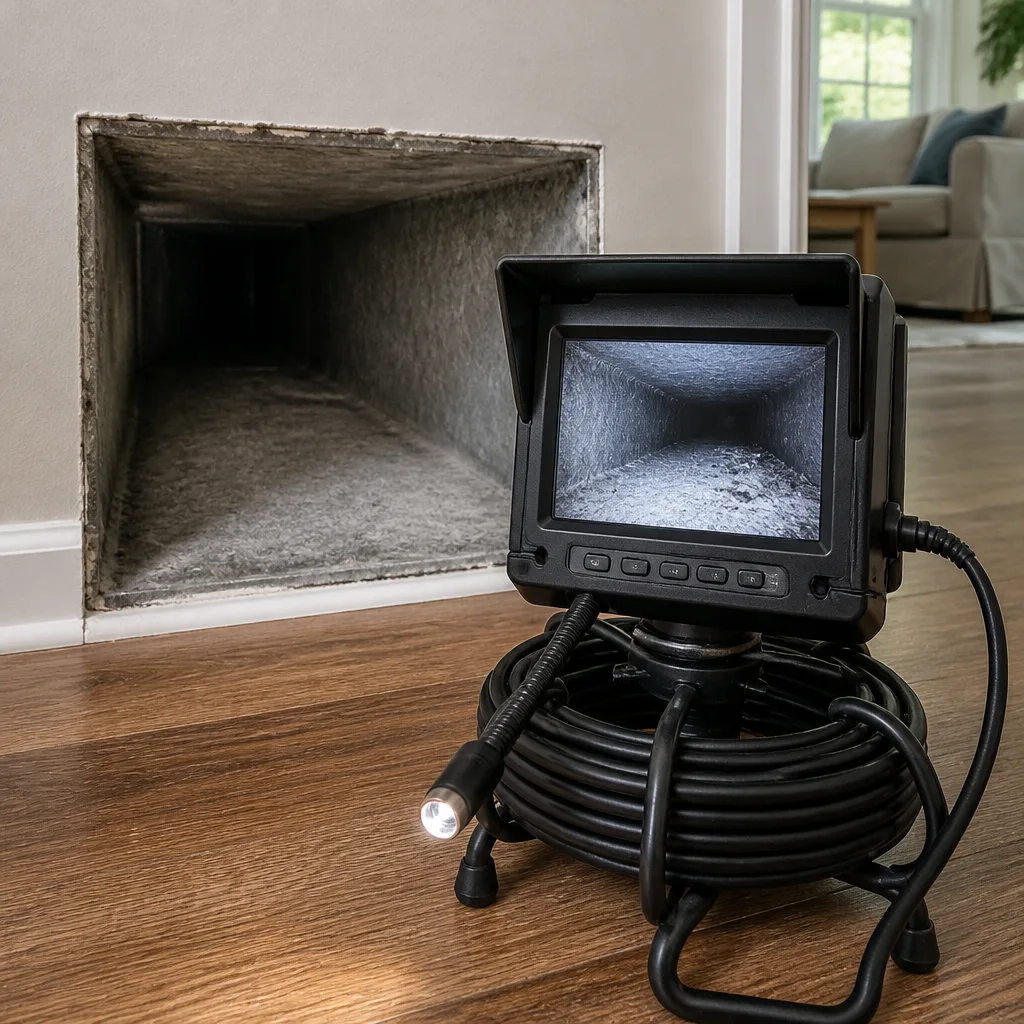 Camera inspection
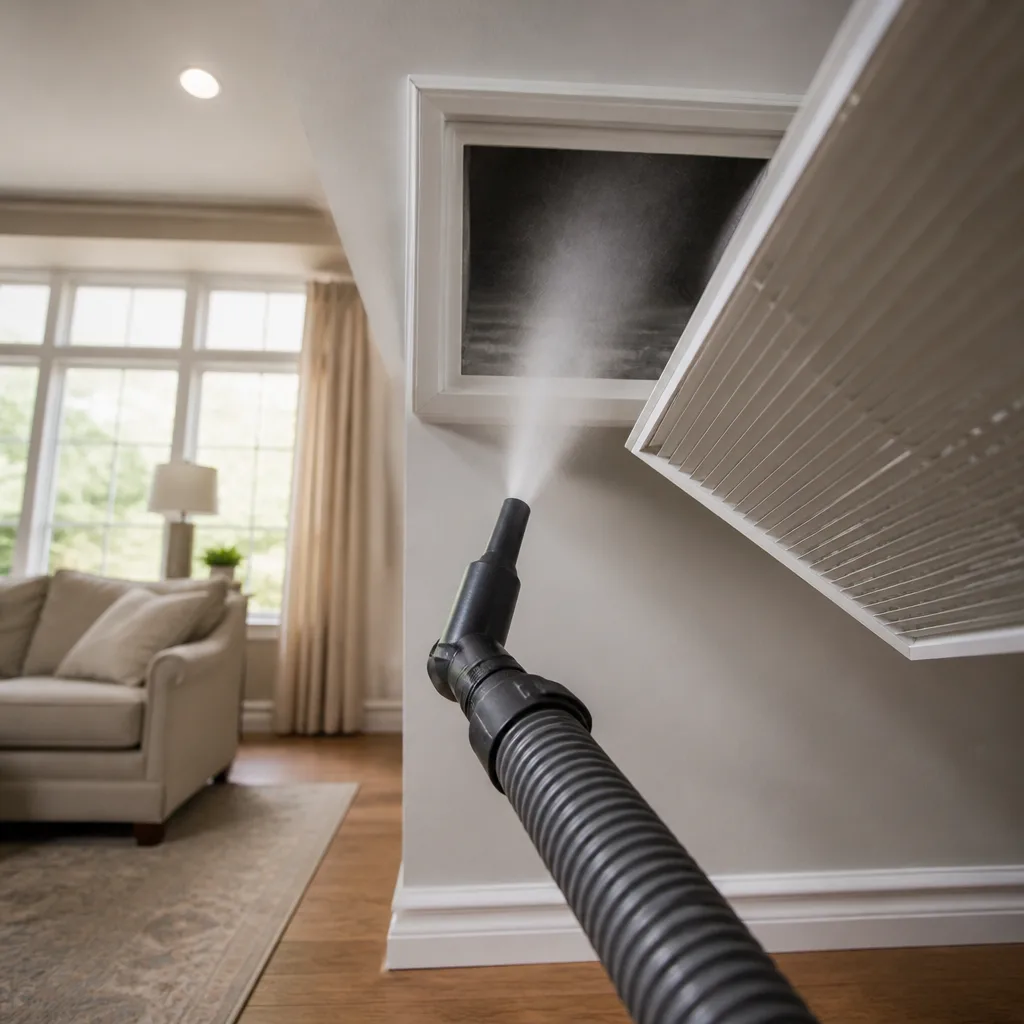 Sanitizing & deodorizing
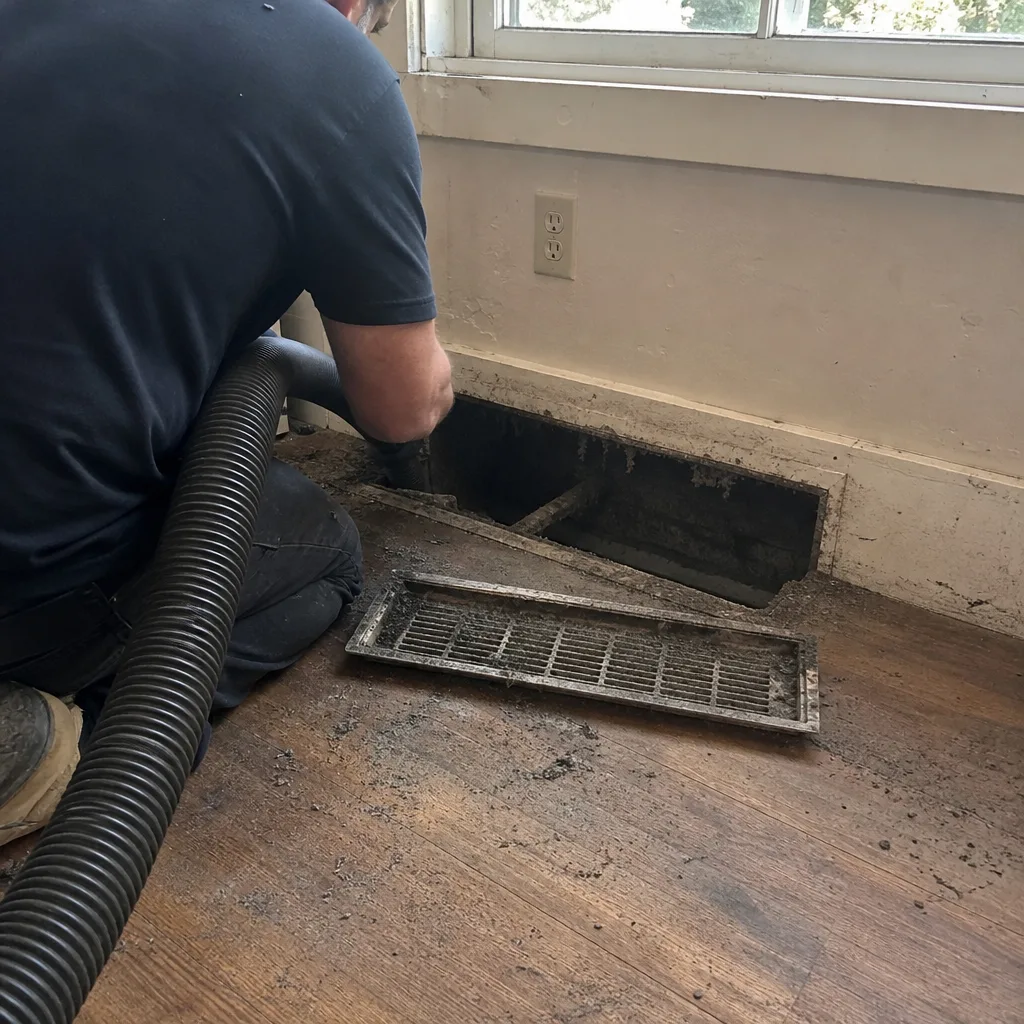
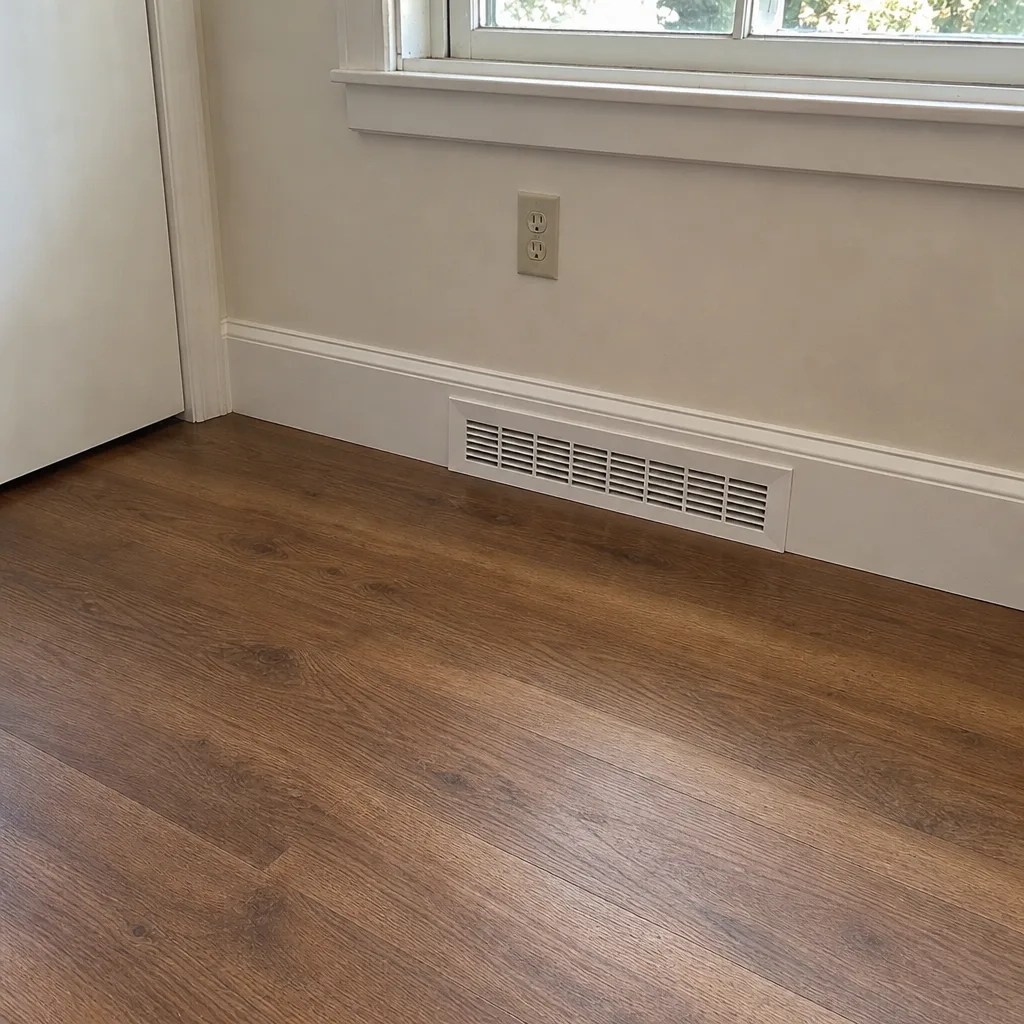
Whole-system duct and dryer vent check with before-and-after photos - you see exactly what came out of your vents
That "$99 whole-house special" is a bait ad - the real number appears once they are in your hallway, or the "clean" is a shop-vac at the register. We photograph the inside of your ducts before and after instead.
The Complete Guide to Air Duct Cleaning in Kent
Most homeowners wait for a visible problem before they think about their ducts. That’s backward, especially here. Kent averages more than 150 days of measurable precipitation a year, which means moisture intrusion into duct systems is a recurring event rather than a one-time risk. By the time you spot dark staining on a register grille, the conditions behind it have likely been building for years. This guide covers what actually happens inside Kent ductwork, how the local climate changes the cleaning protocol, what a real full-system clean includes, and how to tell a thorough job from a cosmetic one.
Quick Answer
Air duct cleaning in Kent removes accumulated dust, moisture-fed biological growth, and debris from the entire air delivery system: main trunk, branch runs, returns, plenums, and coil. In Kent’s wet climate, the job is less about dust and more about controlling moisture that feeds mold and biofilm inside sheet metal and duct board. A complete service should include source removal with negative-pressure equipment, mechanical agitation, and a post-cleaning report showing before-and-after airflow readings.
Styles & brands we work with
- Whole-home duct cleaning
- Dryer vent cleaning
- Camera inspection
- Sanitizing & deodorizing
Table of Contents
- Why Kent’s Climate Makes Duct Cleaning Different
- How Moisture Drives Mold and Biofilm Growth Inside Ducts
- Truck-Mounted vs. Portable Equipment: Why It Matters in Kent Homes
- What a Full-System Clean Actually Includes
- Duct Board in Pre-1990 Kent Homes: A Different Protocol
- How to Read a Post-Cleaning Report
- How Much Does Air Duct Cleaning Cost in Kent?
- How Often Should Kent Ducts Be Cleaned?
Why Kent’s Climate Makes Duct Cleaning Different
National duct cleaning guides are written for an average climate that doesn’t exist. Kent sits in the Puget Sound lowlands, where winters are mild but persistently damp and the rain doesn’t arrive in dramatic storms so much as in months of steady drizzle. That pattern matters because duct contamination in Kent is driven by humidity cycling more than by dry dust accumulation. Every season change pushes warm, moist air through a system that was cold hours earlier, and condensation forms on interior metal surfaces. Repeat that cycle through hundreds of days of precipitation and you have ideal conditions for biological growth.
The local built environment amplifies this. Kent has a large share of ranch-style and split-level homes from the mid-to-late twentieth century, and many of those systems were designed with minimal filtration and flexible or duct board runs in unconditioned spaces. Crawlspace and attic duct runs in this climate stay damp for long stretches. Proximity to the Cedar Hills area adds another variable: airborne particulate from the surrounding industrial and landfill corridor settles into return air, and once it’s damp it becomes a substrate rather than just dust.
What that means practically:
- Dust alone is rarely the primary problem in Kent ducts; moisture and the growth it feeds usually are.
- Systems with duct runs through crawlspaces or vented attics need inspection for condensation, not just debris.
- Homes near the industrial corridor may need more frequent return-side cleaning than the national “every three to five years” advice suggests.
- Musty odors in a Kent home are a moisture signal, not a cleaning-freshness signal.
If you’ve been putting off a look at your system, our team at Kent Air Duct Cleaning Co can inspect it and tell you honestly whether it needs work.
How Moisture Drives Mold and Biofilm Growth Inside Ducts
Mold needs three things: organic material, moderate temperature, and moisture. Your ductwork supplies all three. Dust, skin cells, pet dander, and lint provide the food. A conditioned home stays in the temperature range mold prefers. And in Kent, moisture arrives reliably through condensation on cold duct surfaces, small leaks at joints, and humid crawlspace air drawn into return runs. Once growth starts, it doesn’t stay put. Spores travel with the airstream and land on register grilles, blinds, and furniture surfaces throughout the house.
Biofilm is the harder problem. It forms where condensation persists on sheet metal, creating a thin, sticky layer that traps more dust and holds more moisture. A vacuum that only removes loose debris leaves the biofilm intact, and the system recontaminates within a season. This is why sanitizing belongs in the same visit as cleaning, and why “clean it, seal it, sanitize it” is a sequence rather than a slogan.
Three signs that point to moisture-fed growth rather than ordinary dust:
- Persistent musty odor that returns shortly after you clean filters.
- Visible staining or dark speckling on register faces, especially in bathrooms and laundry areas where indoor humidity runs higher.
- Allergy symptoms that worsen indoors during the wettest months, or that ease when the system isn’t running.
If any of those sound familiar, an inspection is the right next step before you spend money on anything else. We can also address the upstream cause with HVAC cleaning, since a contaminated coil and drain pan will keep re-seeding a freshly cleaned duct system.
Truck-Mounted vs. Portable Equipment: Why It Matters in Kent Homes
The single biggest quality difference between duct cleaning companies is the vacuum. A truck-mounted negative air machine pulls several thousand cubic feet per minute and holds the entire duct system under continuous negative pressure, so dislodged debris travels out of the house instead of into your living room. A portable shop-style unit moves a fraction of that volume. On light dust in a short, straight duct run, the difference is modest. In Kent’s older ranch and split-level homes, with long branch runs, tight crawlspace turns, and duct board sections, it’s the difference between source removal and surface disturbance.
We use Rotobrush rotary contact cleaning systems for mechanical agitation of duct walls and Nikro professional HVAC vacuuming equipment for negative-pressure source removal. We also run Abatement Technologies air filtration units on site to protect indoor air quality during the work itself. That combination is built for the local housing stock rather than for a coupon-service schedule.
What to ask any company before booking:
- Is the vacuum truck-mounted or portable, and what is its rated airflow?
- Will the system be held under negative pressure for the entire job?
- What equipment agitates the duct walls, and does it reach branch runs or only the main trunk?
- Is filtration equipment used during the cleaning, or only afterward?
- Are before-and-after photos of your own system provided?
If a quote can’t answer those five questions, that’s your answer.
What a Full-System Clean Actually Includes
“Duct cleaning” is used loosely. Some companies clean the registers you can see and call it done. A full-system clean covers every component that touches the airstream, and the difference shows up in airflow and air quality, not in a photo of a shiny vent cover. Here is what a complete air duct cleaning visit should include in a Kent home.
- Main trunk line: the large central run, agitated along its full length under negative pressure.
- Branch runs: every supply duct feeding individual rooms, including those with difficult crawlspace or attic access.
- Return ducts: often the most contaminated section, since return air carries the heaviest particulate load.
- Supply and return plenums: the transition boxes at the air handler, where debris accumulates fastest.
- Evaporator coil and drain pan: cleaned as part of the system, since a dirty coil recontaminates clean ducts.
- Registers and grilles: removed, cleaned, and reinstalled.
- Sanitizing: application to the cleaned interior to address residual biological growth.
- Sealing: compromised joints and disconnected runs sealed so the system stops drawing unconditioned crawlspace or attic air.
That last step is where a lot of companies stop short. We repair what others leave broken, which matters in Kent because a disconnected branch run in a damp crawlspace pulls moisture-laden air into the living space continuously. We also handle dryer vent cleaning during the same visit, since lint accumulation is a well-known residential fire hazard and one call covers the whole ventilation picture.
Duct Board in Pre-1990 Kent Homes: A Different Protocol
Many Kent homes built before 1990 used fiberglass duct board rather than sheet metal for trunk and branch runs. Duct board is a rigid insulation panel with a foil or fiberglass-mat facing, and it behaves nothing like metal under cleaning. The facing is fragile. Aggressive rotary brushing can abrade it, and once the interior surface is damaged, exposed fiberglass fibers enter the airstream and the board becomes a moisture trap rather than a duct.
The protocol for duct board is different in three ways:
- Lower agitation pressure. Contact cleaning still happens, but with brush heads and pressure settings matched to the material rather than metal.
- Moisture inspection first. In Kent’s climate, duct board in a crawlspace or attic may already be saturated or delaminating. If it is, cleaning won’t fix it, and replacement of the affected section is the honest recommendation.
- Sealing focus. Duct board joints are taped, and that tape fails over time. Failed seams in a damp crawlspace are a direct pathway for moisture and particulate. Sealing the joints is often more valuable than cleaning the interior.
If you own a pre-1990 Kent home and haven’t had the ducts inspected, ask specifically whether your system uses duct board and how the company adjusts for it. A company that gives the same answer for metal and board hasn’t looked closely enough. Our technicians have up to 8 years of experience and have worked both materials extensively in this housing stock.
How to Read a Post-Cleaning Report
A cleaning report is only useful if you know what the numbers mean. The core of a credible report is before-and-after airflow readings, usually taken at the air handler and at a sample of registers, plus photographic documentation of the duct interiors. Airflow readings tell you whether the cleaning actually opened up the system or just removed surface dust.
What to look for:
- Static pressure readings before and after. A drop in system static pressure after cleaning means the system is moving air more freely. If there’s no change, either the ducts were already clean or the restriction wasn’t in the ducts.
- Register-by-register airflow comparison. The weak rooms in your home before cleaning should show measurable improvement. If one register is still weak, the cause may be a disconnected or crushed branch run, not contamination.
- Interior photographs of the trunk, at least one branch run, and the coil, taken before and after. Photos of your own system, not stock images.
- Notes on findings. Sealing deficiencies, disconnected runs, duct board condition, and any moisture issues found during the work.
- Sanitizing documentation if it was part of the service.
A report that consists of a checkbox list and no readings is a receipt, not a report. Ask for the numbers before you book.
How Much Does Air Duct Cleaning Cost in Kent?
Air duct cleaning in Kent typically runs a few hundred dollars for a straightforward single-system home and more for larger homes, systems with multiple zones, or jobs that include duct repair, sealing, and sanitizing. The final price depends on square footage, number of registers and returns, system layout and accessibility, and whether duct board repair or sealing is needed. We set one flat price per system, agreed before any work starts, and put it in writing. No per-vent pricing, no teaser coupon that grows on the invoice.
Estimated line-item ranges for a Kent home:
- Standard single-system clean (trunk, branches, returns, plenums, registers): a few hundred dollars, depending on system size and access.
- Coil and air handler cleaning: adds to the base clean and is worth including on any system that hasn’t been serviced recently.
- Sanitizing: an add-on to the clean, priced per system.
- Duct repair and sealing: quoted separately once we’ve identified what needs sealing and how accessible it is.
- Dryer vent cleaning: a modest flat add-on when bundled with duct work.
Why some quotes come in far lower than others: portable equipment, register-only cleaning, no coil work, no sanitizing, and no repair capability. A cheap quote often means the company can only clean, and cleaning alone in a damp Kent crawlspace system solves the visible half of the problem. Ask what equipment is being used, whether the coil is included, and whether they can seal a failed joint on the same visit. If the answer is no, the low price is doing its job.
For an exact written estimate on your home, call (877) 792-7319. Estimates are free, and we’ll tell you honestly if your system doesn’t need the work yet.
How Often Should Kent Ducts Be Cleaned?
In a drier climate, every three to five years is a reasonable baseline for a typical home. Kent’s wet winters and persistent indoor humidity push the practical interval shorter for many houses, particularly pre-1990 homes with duct board, homes near the industrial corridor, and any household with pets or allergy sensitivity. But frequency should be driven by inspection findings, not by a calendar. A system that seals well and stays dry can go longer. A system pulling damp crawlspace air through failed seams needs attention sooner regardless of when it was last cleaned.
Reasonable triggers for an inspection:
- It’s been three or more years since the last documented clean.
- You’ve noticed musty odor, visible staining on registers, or worsening indoor allergy symptoms.
- You’ve had water intrusion, a crawlspace moisture issue, or HVAC work that disturbed the ducts.
- You’re moving into a Kent home and don’t have a service history for the system.
- Your energy bills have climbed without a change in usage.
Long-term air quality is also worth addressing at the product level. We supply and install recognized indoor air quality equipment from Honeywell and Aprilaire, which fits naturally with a full-system clean and gives you filtration and humidity control beyond what the ducts alone can do.
Common Mistakes to Avoid
- Judging the job by the registers. Clean vent covers tell you nothing about the trunk line, coil, or return ducts, which is where the contamination actually lives. Ask for interior photos before and after.
- Hiring on price alone. The cheapest quote in Kent almost always means portable equipment and register-only cleaning. You’ll pay for the visible half and recontaminate within a season.
- Skipping the coil. A dirty evaporator coil stays dirty no matter how well the ducts are cleaned, and it re-seeds everything downstream. Coil cleaning belongs in the same visit.
- Cleaning without sealing. A failed seam or disconnected branch run in a damp Kent crawlspace means the system pulls moisture-laden air continuously. Clean it, then seal it, or you’ll be back where you started.
- Treating duct board like sheet metal. Aggressive brushing on fiberglass duct board damages the facing and puts fibers into the airstream. Confirm the company adjusts its protocol for the material.
- Ignoring the dryer vent. Lint accumulation is a leading cause of residential fires, and most homeowners never think about it until the dryer runs hot. Bundle dryer vent cleaning with the duct work.
- Accepting a report with no numbers. A checkbox list is not a cleaning report. Demand static pressure readings and register airflow comparisons before and after.
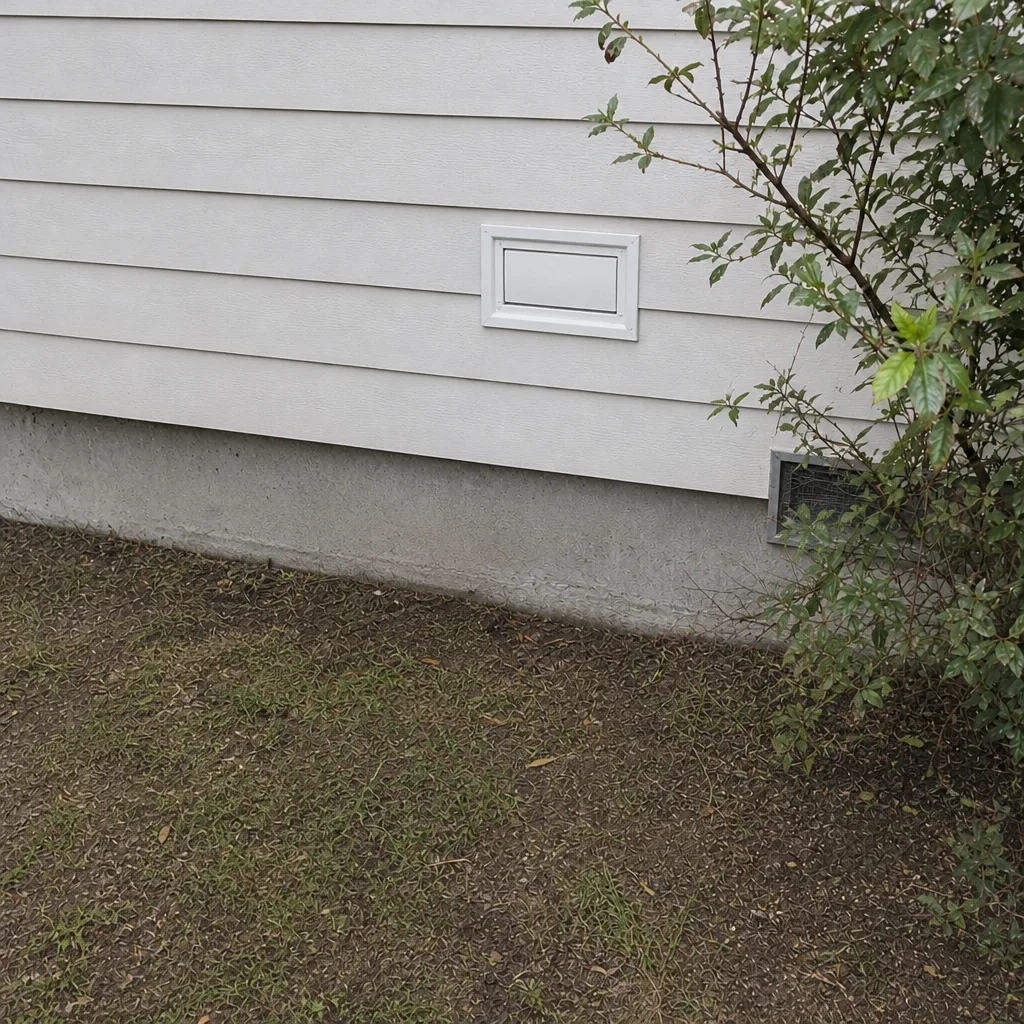
See the difference
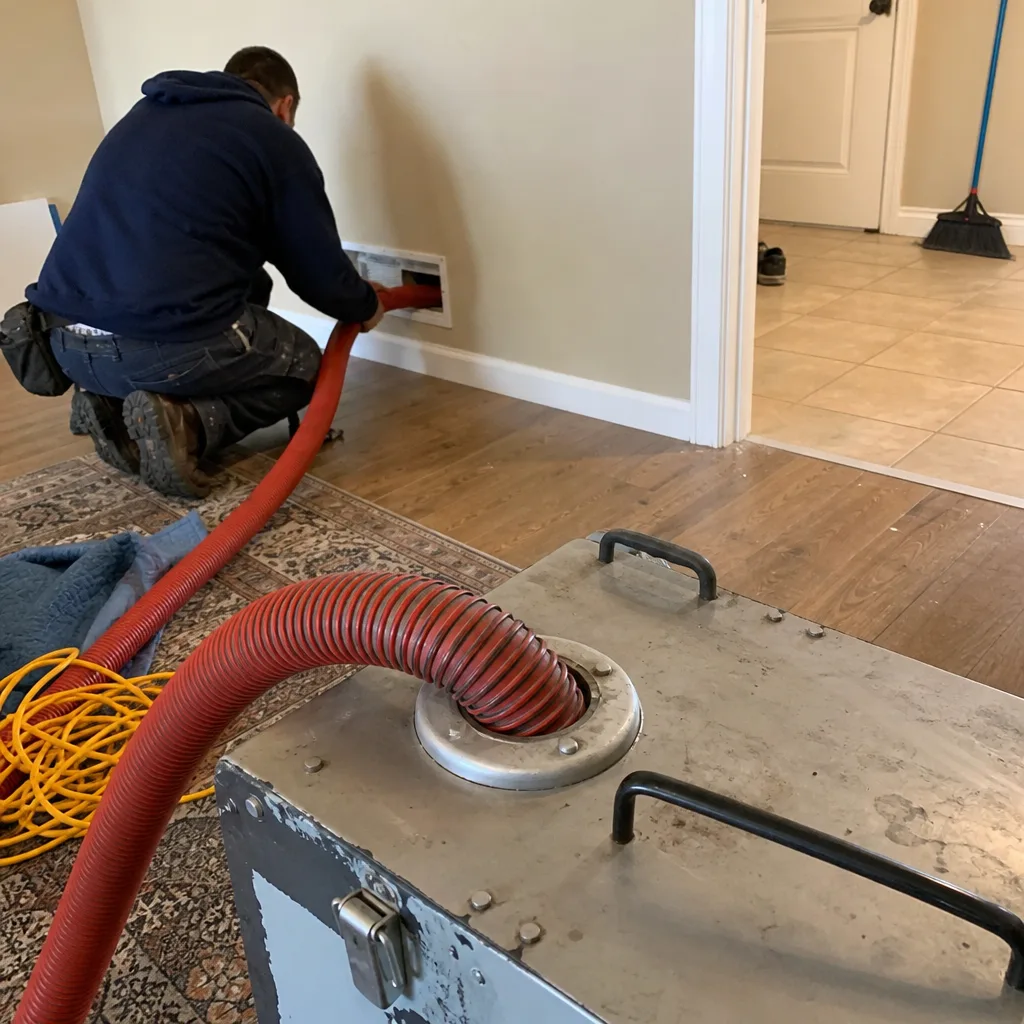 Before
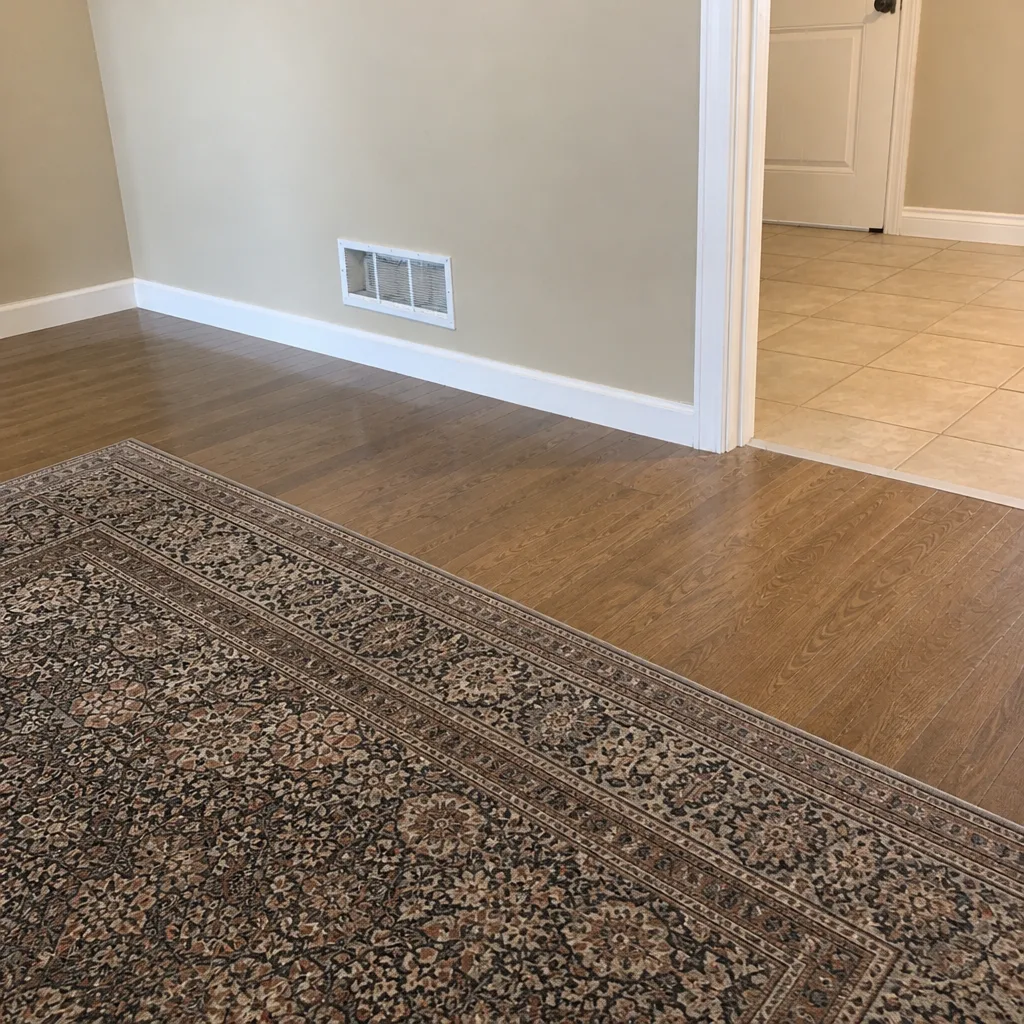 After
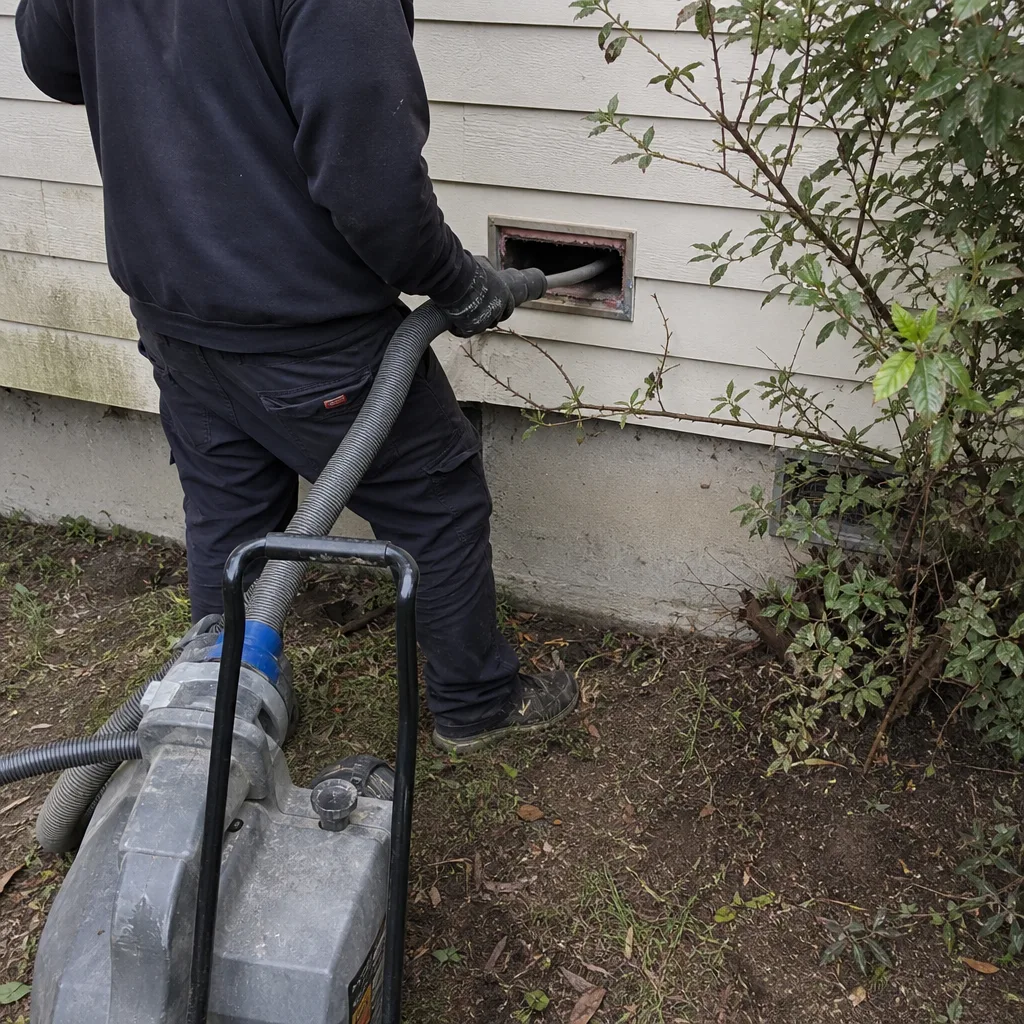 Before
 After
 Before
 After
When to Call a Professional
Call a professional when you can smell mustiness that returns after cleaning filters, when you see staining or dark speckling around registers, when allergy symptoms worsen indoors during Kent’s wet months, or when your system hasn’t been inspected in three or more years. Also call if you’ve had water intrusion, crawlspace moisture, or any HVAC work that disturbed the ducts, and if you own a pre-1990 Kent home and don’t know whether your system uses duct board. Kent Air Duct Cleaning Co offers free estimates in Kent. Call (877) 792-7319. We answer 24/7. Fast dispatch from 7am to 7pm, Sunday through Friday. We’re closed on Saturday, and a call outside dispatch hours is booked into the next opening.
Frequently Asked Questions
Air duct cleaning in Kent typically runs a few hundred dollars for a standard single-system home, with added cost for larger or multi-zone systems, coil cleaning, sanitizing, duct repair, and sealing. We set one flat price per system, agreed before work starts, and put it in writing so there are no surprises. Call (877) 792-7319 for an exact quote. Estimates are free.
Cheap quotes usually mean portable equipment rather than a truck-mounted negative air machine, register-only cleaning that skips the trunk and coil, no sanitizing, and no capability to repair or seal compromised ductwork. That leaves the moisture source in place, so the system recontaminates within a season. Ask what equipment is used and whether the coil and sealing are included. Call (877) 792-7319 and we’ll walk you through an honest comparison.
You should receive interior photographs of your own ducts and coil, taken before and after, plus static pressure readings and register airflow comparisons. A real report has numbers and images; a checkbox list is just a receipt. Ask for readings before you book, and confirm the report includes them. Call (877) 792-7319 to see what our reports include.
In drier climates every three to five years is a reasonable baseline, but Kent’s wet winters and persistent indoor humidity push many homes toward a shorter interval. The right answer is driven by inspection findings, not a fixed calendar. Homes with duct board, pets, allergy sensitivity, or proximity to the industrial corridor should be inspected more often. Call (877) 792-7319 if it’s been three or more years.
Yes. Cleaning and sealing belong together, and we do both on the same visit when conditions allow. That means identifying and sealing disconnected branch runs and failed joints, particularly in damp crawlspaces and attics, so the system stops drawing moisture-laden air into your living space. Call (877) 792-7319 to schedule an inspection.
No. Duct board requires lower agitation pressure and a gentler brush, because the interior facing is fragile and can be damaged by aggressive rotary cleaning. If the board is already saturated or delaminating in a Kent crawlspace, replacement of that section may be the honest recommendation. Call (877) 792-7319 to find out what your system uses.
The Bottom Line
In Kent, duct cleaning isn’t a dust problem; it’s a moisture problem. High annual rainfall, mild damp winters, older ranch and split-level housing stock, and duct board in pre-1990 homes all push contamination deeper and faster than the national “every few years” advice suggests. A clean that matters is equipment-driven, covers the full system from trunk to coil, includes sealing and sanitizing, and ends with a report you can actually read. One flat price per system, agreed before work starts, and photos of your own ducts. If you’re not sure where your system stands, we’ll tell you honestly.
Call (877) 792-7319 for a free estimate. We answer 24/7. Fast dispatch from 7am to 7pm, Sunday through Friday. We look forward to hearing from you.
Written by the team at Kent Air Duct Cleaning Co.