
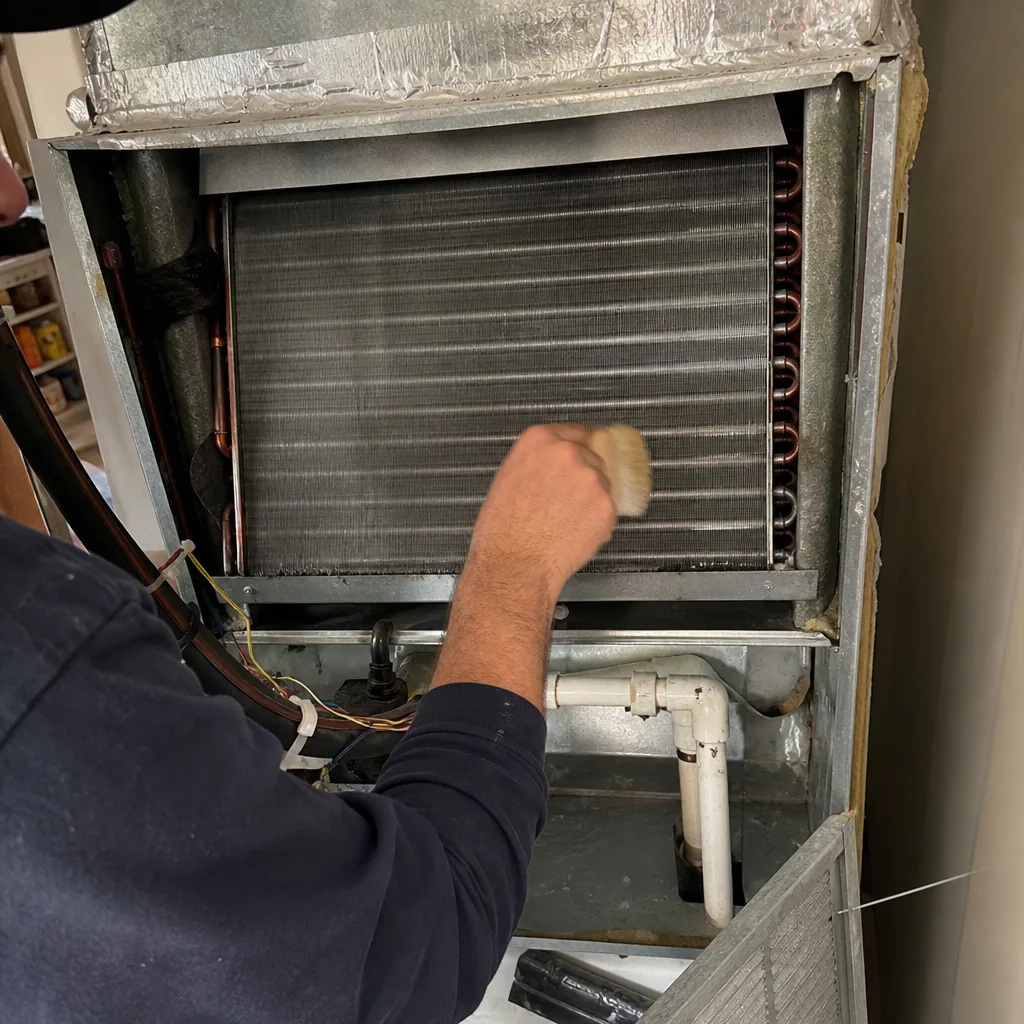
Last updated November 23, 2026
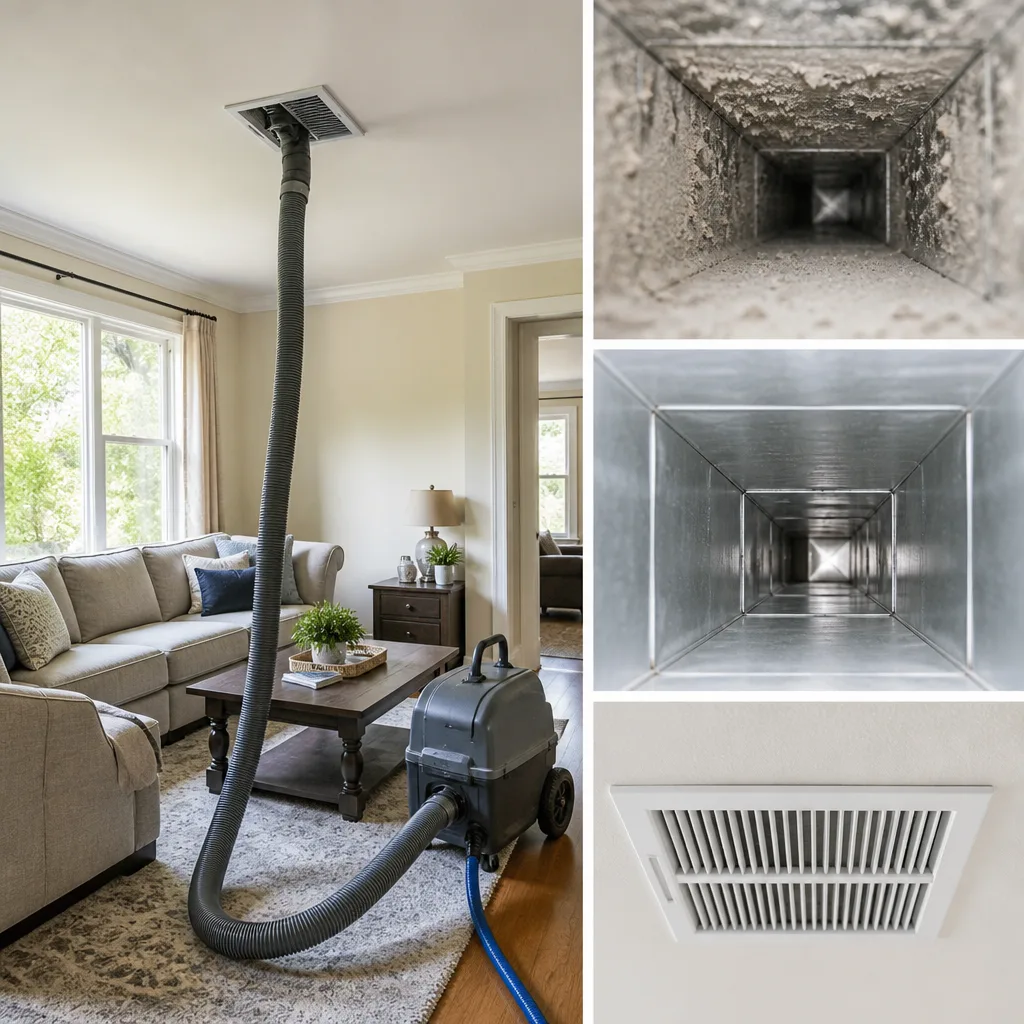 Whole-home duct cleaning
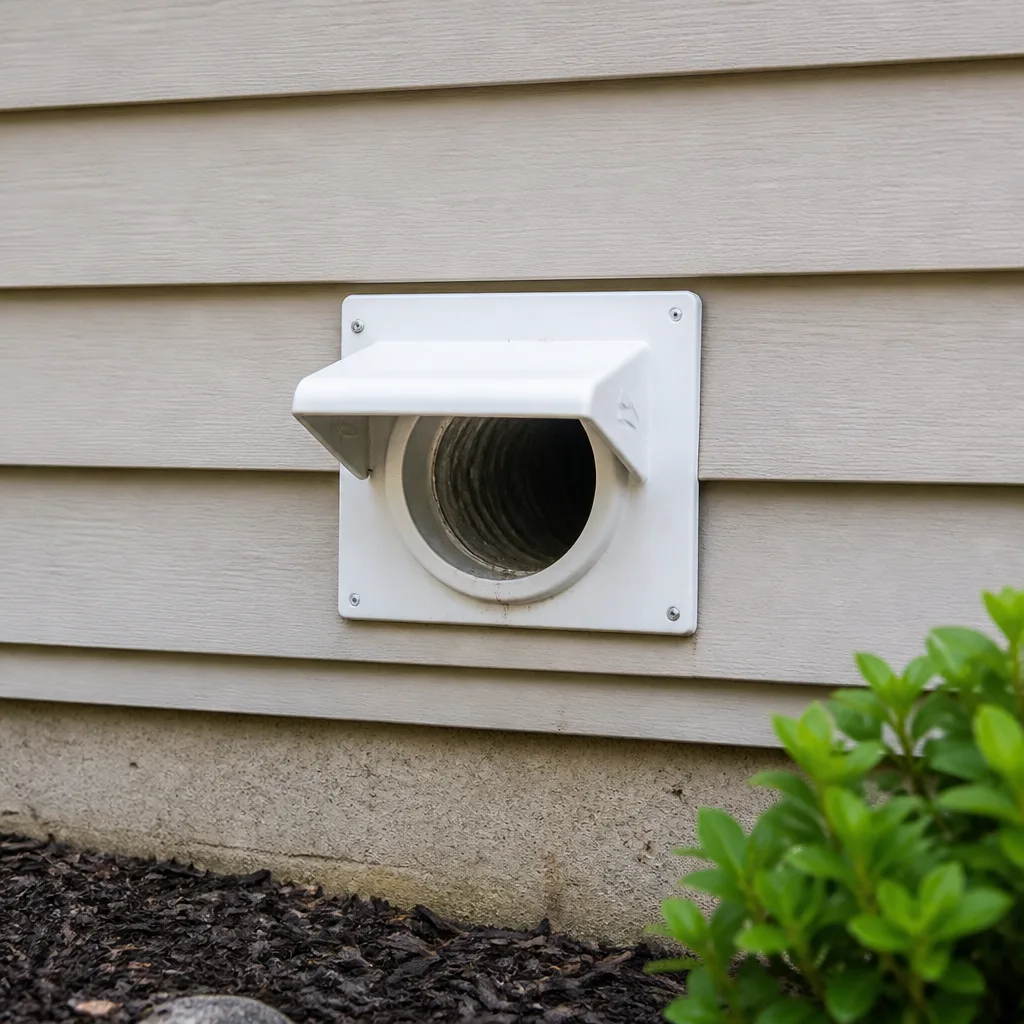 Dryer vent cleaning
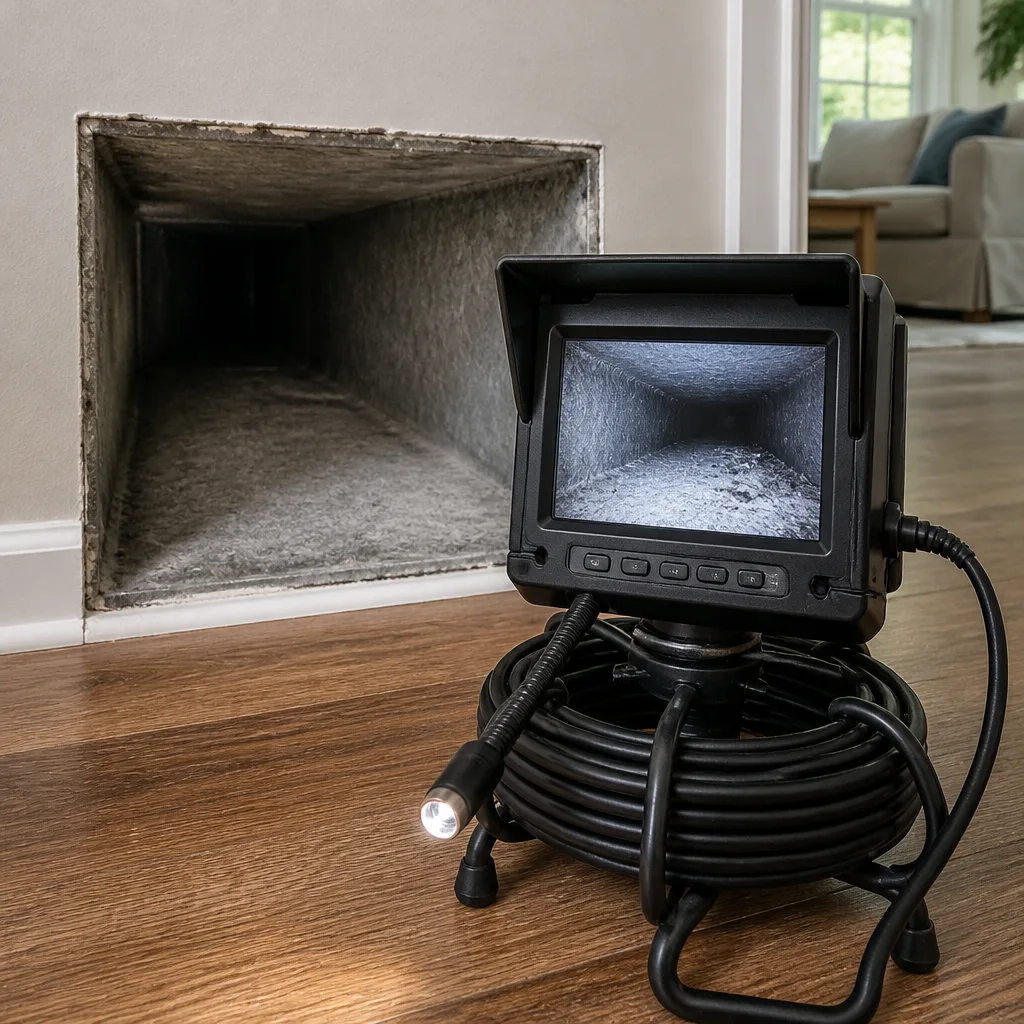 Camera inspection
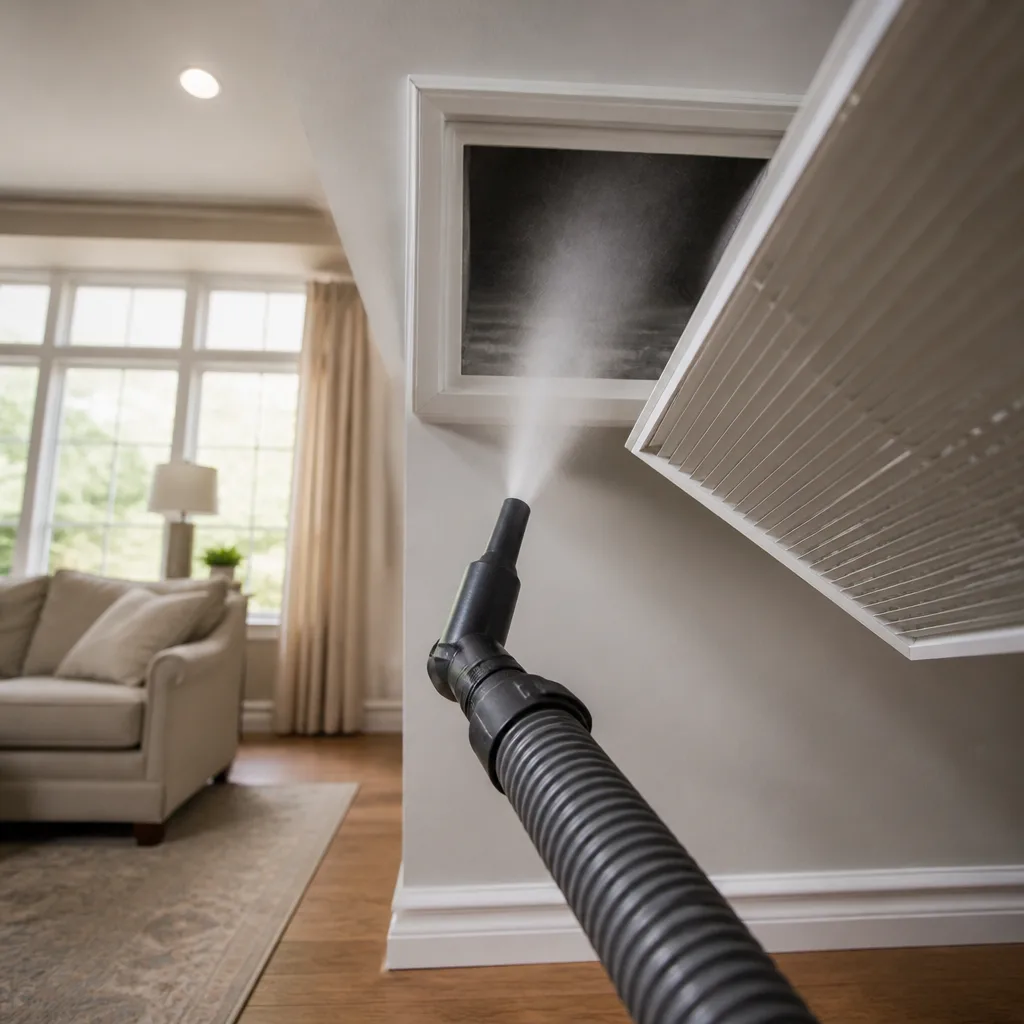 Sanitizing & deodorizing
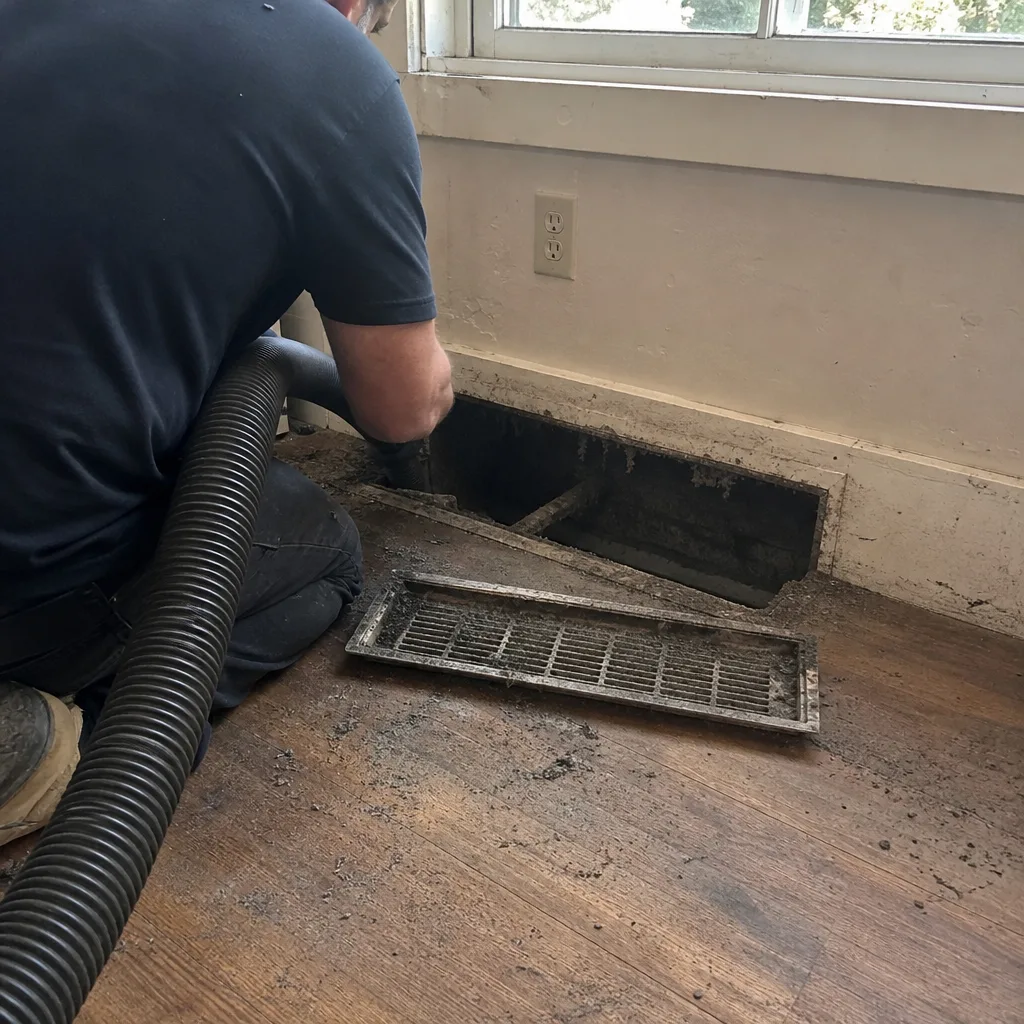
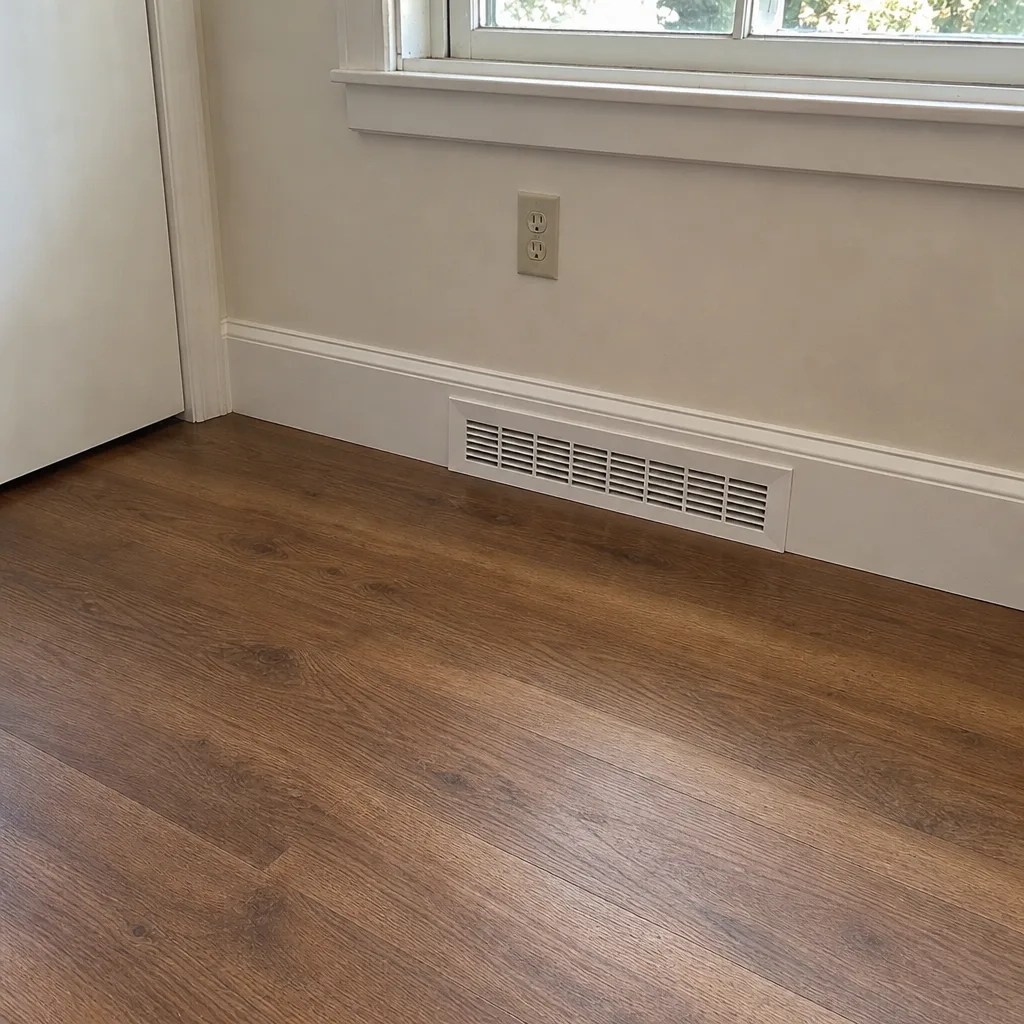
Whole-system duct and dryer vent check with before-and-after photos - you see exactly what came out of your vents
That "$99 whole-house special" is a bait ad - the real number appears once they are in your hallway, or the "clean" is a shop-vac at the register. We photograph the inside of your ducts before and after instead.
Seasonal Air Duct Cleaning Care for Kent: Year-Round Homeowner’s Guide
Most homeowners treat air duct cleaning as a once-and-done chore, something to book when the dust on the vents finally gets embarrassing. That thinking misses what’s actually happening inside the system. In Kent, your ductwork runs through four very different seasonal loads every year: tree pollen in spring, wildfire smoke in late summer, construction dust from the Kent Valley’s industrial build-out in fall, and the condensation that feeds mold growth through winter. Each one deposits something different on your duct liners and coil surfaces, and each calls for a different response. This guide walks through what each season throws at your system, how to recognize it, and how to time a professional cleaning so you get real value instead of a repeat visit six months later.
Quick Answer
The right time to clean air ducts in Kent is late spring, after pollen season peaks but before summer smoke events, paired with a post-smoke inspection in early fall if August or September brought wildfire haze to the area. A single well-timed cleaning plus a lightweight filter-and-inspection routine the rest of the year keeps the system healthier than two random cleanings. We’ll explain the seasonal reasoning behind that schedule below.
Styles & brands we work with
- Whole-home duct cleaning
- Dryer vent cleaning
- Camera inspection
- Sanitizing & deodorizing
Table of Contents
- Spring in Kent: Pollen, Construction Dust, and Crawlspace Intakes
- Summer Smoke Events: What to Do During and After
- Fall Heating Startup: First-Fire Odor vs. a Real Problem
- Winter Condensation and Mold Risk by February
- How to Time a Professional Cleaning for Maximum Value
- The Dryer Vent Belongs on the Same Seasonal Schedule
- Common Mistakes to Avoid
- When to Call a Professional
Spring in Kent: Pollen, Construction Dust, and Crawlspace Intakes
Spring in Kent loads the return side of your system harder than any other season. The Kent Valley sits in a low bowl between the Cascades and the Sound, and that geography holds pollen longer than hilltop neighborhoods do. Alder, birch, and cottonwood pollen arrive in waves from March through May, and every open window during a warm afternoon pulls that pollen straight into the return grilles. Your filter catches some of it. The rest settles on return duct walls, in the joints, and along the blower housing where the filter can’t reach.
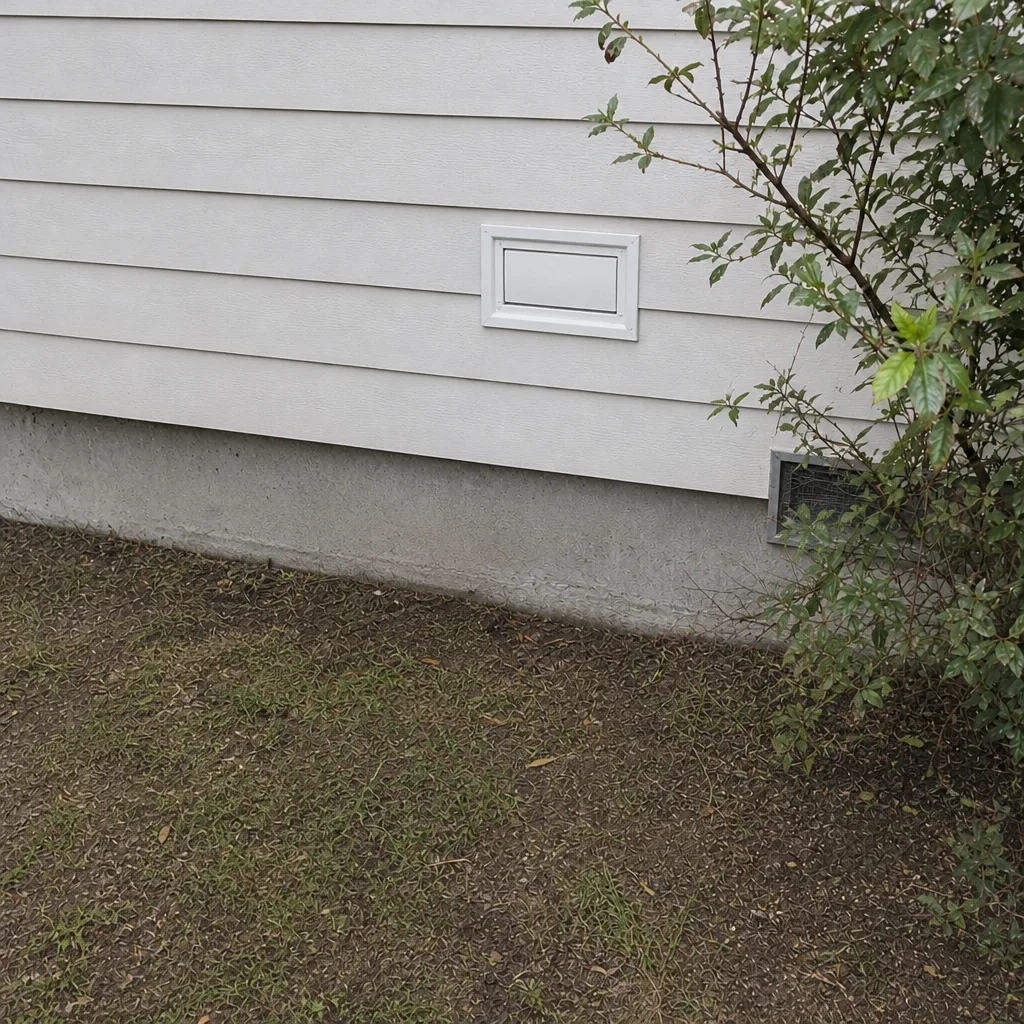
Construction season makes it worse. The Kent Valley’s active industrial build-out means grading, concrete work, and site prep run through spring and into summer. Fine concrete and soil dust is heavier than pollen and settles faster, but it deposits in the same return duct runs, and crawlspace return intakes are especially vulnerable. Kent has a lot of older housing stock with returns run through or near vented crawlspaces, and those intakes pull in soil dust, insulation fibers, and moisture-laden crawlspace air along with the return air.
What to watch for in spring:
- A visible dust film on return grilles that returns within two weeks of cleaning
- Increased allergy-type symptoms indoors that ease when you leave the house
- Filter loading faster than usual (checking monthly rather than quarterly)
- A musty or earthy smell near crawlspace return intakes during wet spring weather
Spring is also when a duct evaluation matters most. Loose joints, disconnected runs, and gaps at crawlspace penetrations pull in exactly this kind of contaminated air. A cleaning without a sealing check leaves the same path open for the rest of the year. Our air duct cleaning work includes a look at joint integrity, which is where we find most of the problems that caused the visible dust in the first place.
Summer Smoke Events: What to Do During and After
Wildfire smoke from Eastern Washington reaches Kent’s air shed most Augusts and Septembers. When it does, it doesn’t just sit in the outdoor air. The ultrafine PM2.5 particles that make smoke plumes hazardous are small enough to pass a standard filter and to stick to duct liner surfaces and evaporator coils. Once they’re there, every blower cycle pushes a fraction of them back into your living space, long after the visible haze has cleared.
What to do during a smoke event:
- Close windows and doors and set the thermostat to run the fan continuously rather than in auto. Continuous air movement lets the filter work more passes per hour.
- Switch your system to recirculation mode if your thermostat supports it. Recirculation stops pulling outdoor air through the economizer or fresh-air intake and keeps the system working on indoor air only.
- Upgrade to the highest-MERV filter your system can handle without excessive static pressure. This is a conversation to have with an HVAC professional before smoke season, not during it.
- Run a portable HEPA purifier in the bedroom where the household sleeps.
- Check the filter every two weeks during an event; smoke loads a filter much faster than normal household dust.
What to do after: this is where most homeowners miss the step that matters. Once the smoke clears, run the system with the fan on for a few hours to flush what’s still circulating, then have the duct system and the coil surface inspected. A post-event inspection should check the evaporator coil for a tacky film, the return ducts for deposited particulate, and the blower wheel for imbalance from buildup. Ignoring that step is how smoke particulate ends up as a persistent indoor air quality problem instead of a short-term event.
We use Abatement Technologies air filtration equipment during service so that any particulate we disturb during the cleaning is captured and contained rather than released into the home. That matters on a post-smoke job more than almost any other.
Fall Heating Startup: First-Fire Odor vs. a Real Problem
When the heat comes on in October in Kent, a lot of homeowners notice an odor for the first time in months and assume the worst. Sometimes they’re right, sometimes they aren’t. Here’s how to tell the difference.
What a normal first-fire odor smells like
If your system runs a gas furnace or heat pump with backup heat, the first several cycles of the season sometimes carry a light burnt-dust smell. That’s dust that settled on the heat exchanger over the summer burning off. It should clear within a few cycles. Turn the thermostat fan to on, open a few windows, and let it burn off.
What a real problem smells like
An acrid, sharp, or chemical smell that doesn’t clear, or that comes with soot on the supply registers, is a different signal. Heat exchangers can develop cracks that push combustion byproducts into the supply air, and that’s a safety concern, not an inconvenience. If the smell doesn’t go away, call an HVAC technician to inspect the heat exchanger before running the system again.
A related issue is puffback: a small combustion event that pushes soot into the duct system. Symptoms include a puff of smoke from the registers, soot streaks near the unit, and a heavier smell. Puffback soot is oily and sticks to duct surfaces. It doesn’t resolve with filter changes, and it doesn’t clean out of a system with a consumer vacuum. Professional cleaning with proper negative-pressure equipment is the correct response.
Our fall advice: schedule a system check before the first cold snap, not during it. Professional cleaning in Kent in September or early October catches the smoke residue from August, the pollen from spring, and the construction dust from summer all in one visit, at a point when the system is about to run hard for the next six months.
We use Rotobrush rotary contact cleaning systems on residential jobs because the rotary action reaches the duct wall and joint surfaces where a straight vacuum wouldn’t. That mechanical contact step is what separates professional cleaning from a shop vac pulled up to a register.
Winter Condensation and Mold Risk by February
This is the season where a duct system that looked fine in October can start telling you something different by February. In Kent, winters are wet and mild. The furnace runs most of the day, indoor temperatures sit around 68 to 72 degrees, and the relative humidity inside a well-sealed home can push toward 55 percent or higher when showers, cooking, and laundry are all adding moisture.
Now add unsealed duct joints. Every leak that pulls air in from a crawlspace or attic during the heating cycle also pulls ambient moisture into the duct system. Once the return air cools slightly along the duct run, that moisture condenses on cold duct surfaces. The same leaks that let pollen in during spring let moisture in during winter.
What the conditions look like by February:
- A persistent musty smell that shows up when the heat first comes on in the morning
- Visible moisture or condensation traces at metal duct joints in the crawlspace or attic
- Dust that has taken on a musty smell rather than staying neutral
- Family members with new respiratory irritation that isn’t tied to an obvious illness
Mold spores need moisture and a food source. Duct dust is a food source. That’s why the seasonal sequence matters: the dust deposited in spring and summer becomes the substrate for the mold that develops in winter. A professional cleaning performed in fall removes the substrate before the winter condensation cycle begins. A cleaning done in January or February removes visible mold but may leave the moisture source, which is usually an unsealed joint.
“We repair what others leave broken” is the phrase our technicians come back to. If we see compromised ductwork during a cleaning, we focus on finding and sealing it in the same visit. Our HVAC cleaning work includes the coil and blower housing, which is where moisture-driven growth often starts first.
By the end of winter, a system that’s been cycling through this pattern for three or four months may need both a cleaning and a sanitizing step. Clean it. Seal it. Sanitize it. That’s the sequence that actually solves the problem, in that order.
How to Time a Professional Cleaning for Maximum Value
If you only clean once a year, the question of when matters more than how often. In Kent, the single highest-value window is late spring to early fall, before the heating season begins. Here’s why, and here’s the reasoning if you want to plan a two-visit year.
Once-a-year schedule
- Late May or early June: Catches spring pollen deposits and pre-construction dust before the summer build-out peaks.
- Alternative: September or early October: Also catches summer smoke residue, and it’s the better choice if your household had any smoke-event exposure in August.
Either is a reasonable single annual timing. The reason not to wait until December or January is that you lose the value of removing the substrate before condensation has a chance to work on it.
Twice-a-year schedule
Homeowners with allergy-sensitive family members, heavy pet traffic, or a recent renovation benefit from two visits. A late spring cleaning followed by a post-smoke inspection and cleaning in September or October keeps the system ahead of both of the heavy deposition seasons. If you find yourself cleaning your own registers monthly and still seeing film, the system is telling you it needs two visits.
One-time deep-cleaning
If you’ve just bought a Kent home and you don’t know the cleaning history, or you’ve had a renovation, or your system has never been professionally cleaned and it’s ten years old or older, a single full-scope cleaning plus a duct sealing evaluation is the right starting point. Schedule it before the heating season, and you’ll be working from a known baseline for the next cycle.
What to look for in a professional cleaning itself, regardless of timing:
- Source-removal equipment with negative pressure (not just a shop vac and a rotary brush)
- Mechanical contact cleaning across the full duct run, not just the run behind the closest register
- A joint and seal inspection after the cleaning, not just a visual check
- Before-and-after photos of your own ducts, so you can see what was pulled out
We use Nikro professional HVAC vacuuming equipment to hold negative pressure during every job, and Abatement Technologies filtration on-site to protect indoor air quality while we work. That combination is what “professional-grade” actually means when a company uses the phrase.
The Dryer Vent Belongs on the Same Seasonal Schedule
Dryer vent cleaning is often left out of the seasonal conversation, which is a mistake. The dryer vent is the other exhaust pathway in a home, and it carries a fire risk if lint accumulates while also affecting air quality and dryer efficiency. In Kent, where many homes have dryers set up against exterior walls or along longer vent runs through framing, lint accumulation is a real concern.
Here’s how to add it to the seasonal schedule:
- Spring: Have the dryer vent cleaned at the same time as the air duct work if you’re booking both. One call covers both systems and both get an inspection.
- After a heavy laundry season: If your household runs laundry several times a week through winter, the vent has likely accumulated a season’s worth of lint by March.
- If your dryer takes two cycles to dry a load: That’s a signal to check the vent regardless of season. It’s often lint buildup, not a failing dryer.
Our dryer vent cleaning is a single-call companion to duct work for exactly this reason. Both systems are exhaust pathways, both accumulate material, and both benefit from the same seasonal review.
Common Mistakes to Avoid
- Cleaning only the ducts behind the visible registers. Kent homes with long horizontal runs or crawlspace routing often have deposition far beyond the nearest register. A cleaning that covers just the accessible sections leaves the rest untouched, and you’ll see dust again within a couple of months.
- Using a shop vac and a brush instead of professional source-removal equipment. Consumer vacuums don’t develop the negative pressure to pull deposited material out of a duct run, and a spinning hand brush doesn’t provide mechanical contact cleaning. The result is agitation without removal, which makes indoor air quality worse in the short term.
- Skipping the post-smoke inspection after an August or September event. Ultrafine smoke particulate on coil surfaces becomes a persistent indoor air quality problem when it’s not addressed. If smoke reached Kent’s air shed, get the coil and return ducts checked before winter.
- Ignoring first-fire odor when it doesn’t clear. A light burnt-dust smell in October is normal. An acrid smell that persists or comes with soot on the registers is a heat exchanger safety concern and needs an HVAC technician, not a duct cleaning.
- Cleaning ducts in winter without fixing the seal problem. If the joints are compromised, moisture is entering the system and mold will return by the next winter. Repair and sealing has to happen in the same visit, or the fix is temporary.
- Treating dryer vent cleaning as optional. Lint accumulation in the vent is a leading cause of residential fires. On a seasonal schedule, it’s a five-minute add-on to the air duct job and removes a genuine safety risk.
- Booking a cleaning without asking what equipment is being used. If a company can’t tell you what pressure system they run, whether they perform mechanical contact cleaning, and whether they inspect joints after the cleaning, you’re not getting the same service you’d get from a full-scope indoor air quality contractor.
When to Call a Professional
Not every seasonal dust event requires a professional visit. A homeowner who changes filters on schedule and sees reasonably clear supply air can often manage a year between cleanings. The situations that call for a professional response in Kent are specific: a smoke event has visibly affected indoor air quality; you’re seeing dust film return within a couple of weeks of filter changes; a musty smell comes and goes with the heating cycle; the system carries an odor after first-fire startup that doesn’t clear; you’ve had a renovation or a puffback; your dryer takes two cycles to dry a load; or you’ve bought a Kent home with an unknown cleaning history.
Kent Air Duct Cleaning Co offers free estimates in Kent. Call (877) 792-7319. We answer 24/7. Fast dispatch from 7am to 7pm, Sunday through Friday. Every job is priced per system by a written estimate agreed before any work starts, and we take before-and-after photos of your own ducts so you can see exactly what was removed.
See the difference
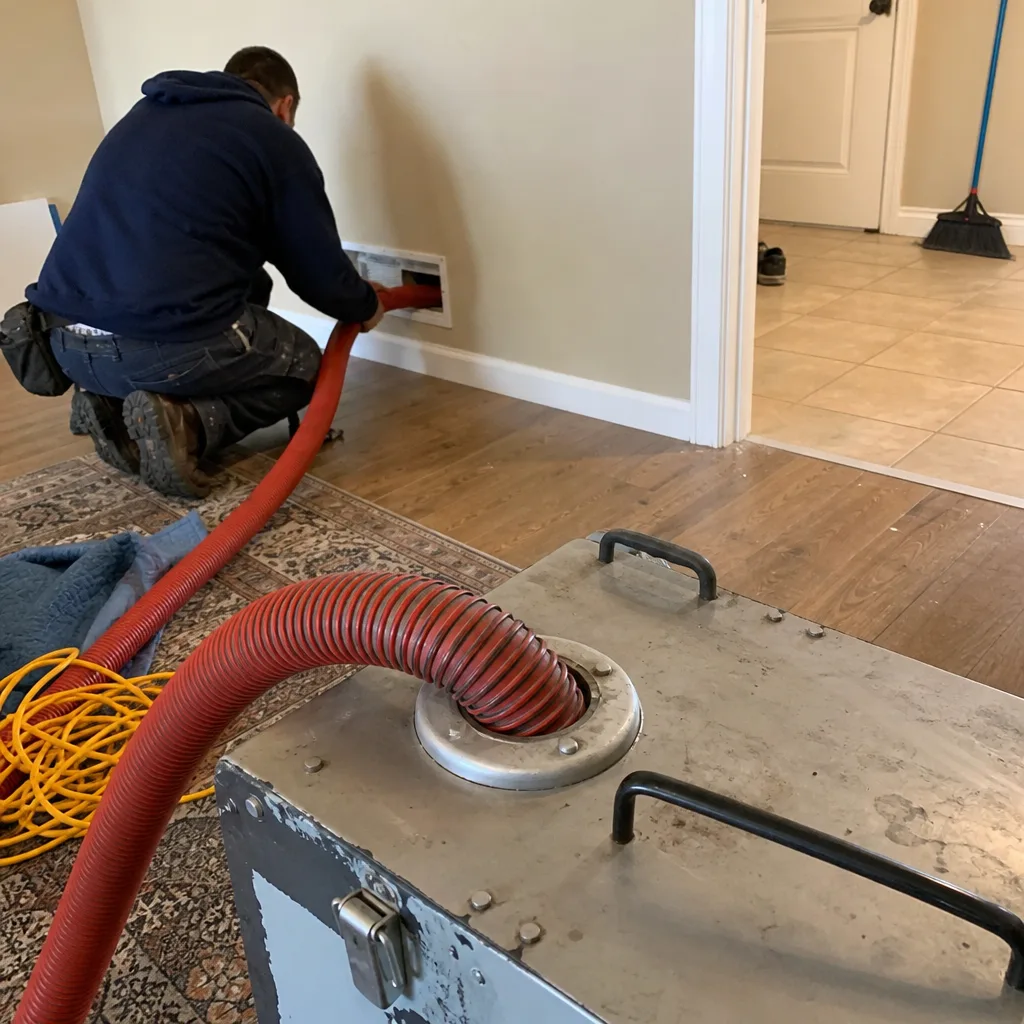 Before
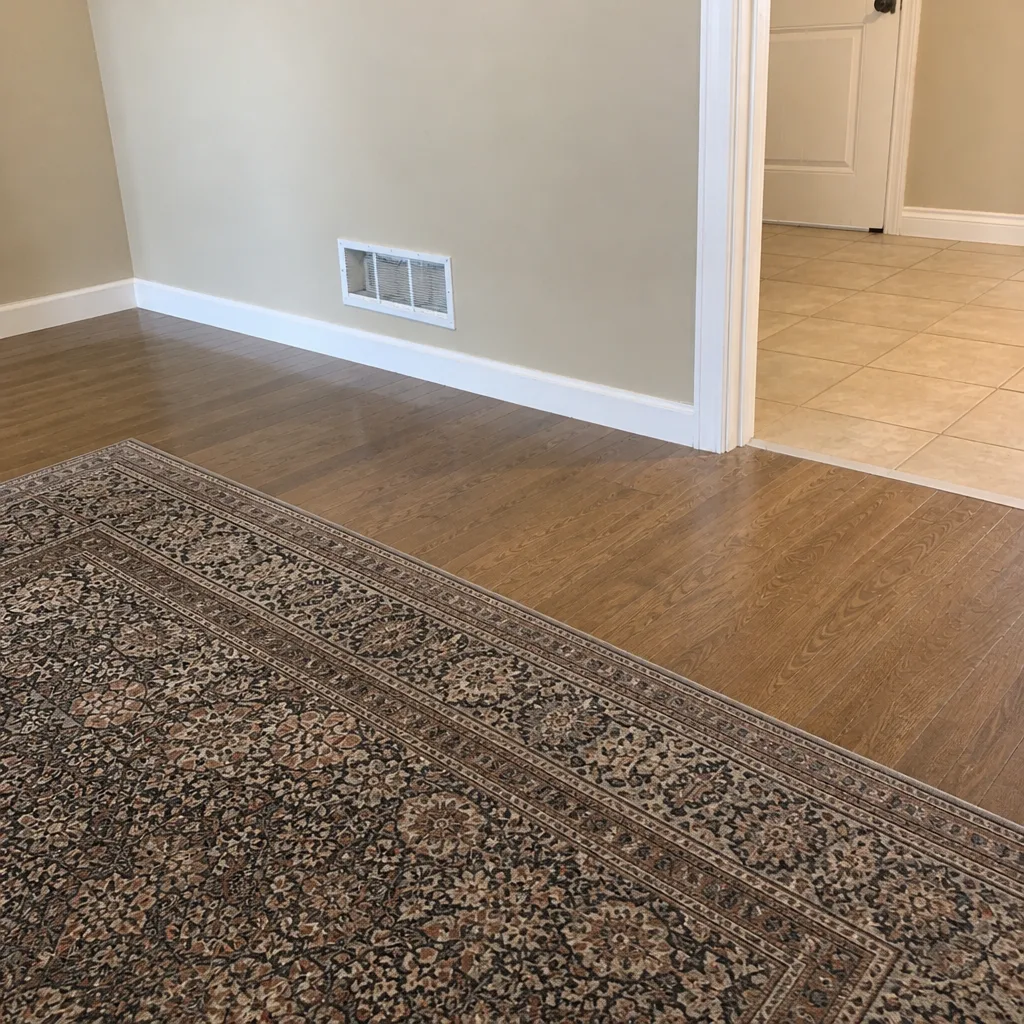 After
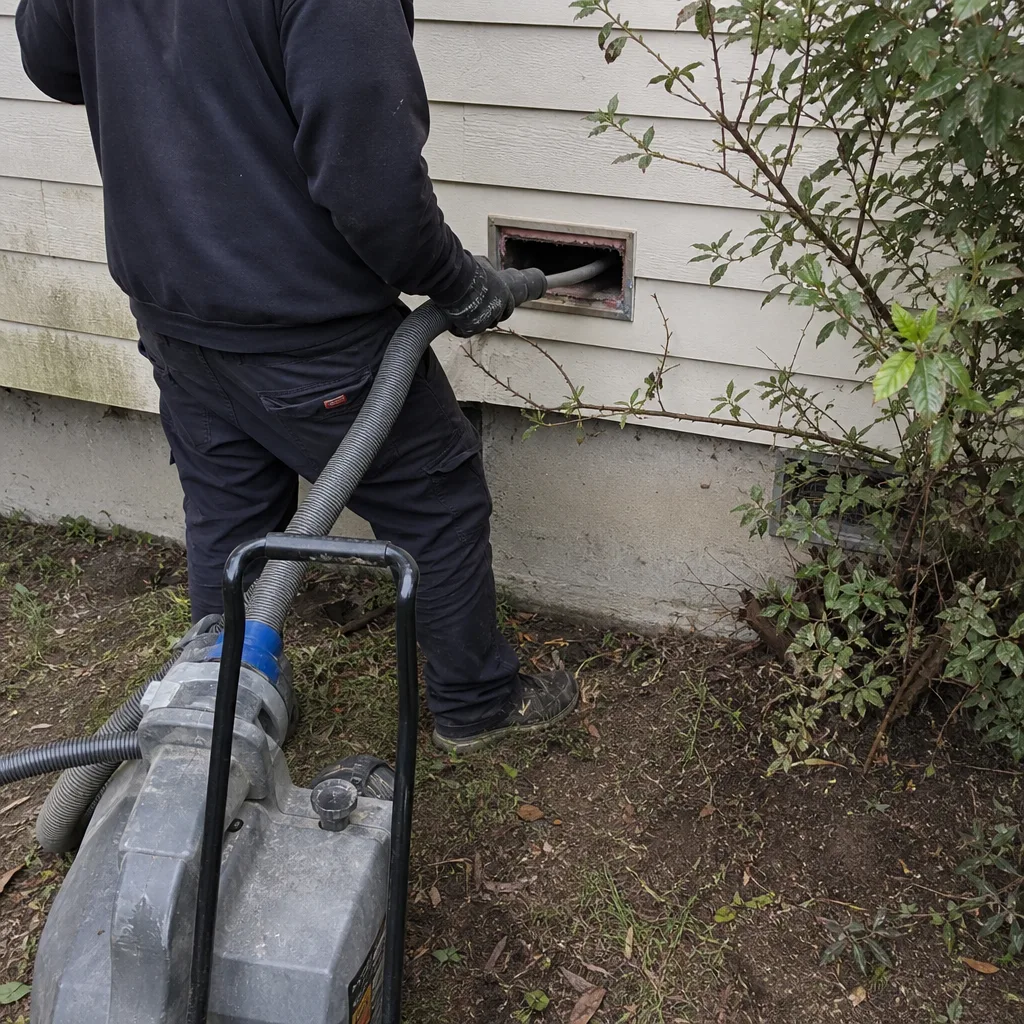 Before
 After
 Before
 After
Frequently Asked Questions
Once a year is the typical interval for most Kent homes, timed to late spring before summer smoke season or early fall before heating startup. Homes with allergy-sensitive occupants, heavy pet traffic, or a recent renovation often do better on a twice-a-year schedule that catches both spring pollen and post-smoke residue. Homes with unknown cleaning history or a recent renovation benefit from a single full-scope cleaning plus a duct sealing evaluation. Call (877) 792-7319 for an exact quote; estimates are free.
Yes. When wildfire smoke from Eastern Washington reaches Kent’s air shed in August and September, ultrafine PM2.5 particles that pass a standard filter deposit on duct liner surfaces and evaporator coils. They re-enter the airstream every time the blower runs, long after the visible haze has cleared. A post-smoke inspection of the coil and return ducts is the right response. Call (877) 792-7319 to schedule an inspection.
A light burnt-dust smell during the first several heat cycles of fall is normal residue from summer dust on the heat exchanger, and it usually clears within a few cycles. An acrid, sharp, or chemical smell that doesn’t clear, or that comes with soot on the supply registers, is a different signal and points to a heat exchanger or puffback issue that needs an HVAC technician. If the odor persists, stop running the heat and get it checked before you restart the system. Call (877) 792-7319 for help coordinating next steps.
Yes. Unsealed duct joints pull moisture into the system during the heating cycle, and that moisture condenses on cooler duct surfaces, especially in crawlspace or attic runs. Combined with the dust deposited earlier in the year, it creates the conditions for mold growth by February. Repairing and sealing compromised joints in the same visit as cleaning addresses the source. Call (877) 792-7319 for a free estimate on cleaning plus a sealing evaluation.
Cheap quotes usually reflect less equipment and less scope, not a better price. A low quote often means no negative-pressure source removal, no mechanical contact cleaning, no joint inspection, and no method for handling the particulate that gets disturbed during the job. In Kent, where smoke and pollen load is real, the difference in outcome is large. We quote per system based on the actual job, not a per-vent teaser price.
If your system is pulling in dust film within two weeks of a filter change, or you notice a musty smell tied to the heating cycle, the joint integrity is worth checking. Cleaning without sealing leaves the entry point open, and the same problem returns. Our inspection includes a look at joint integrity, and we can find, fix, and seal compromised ducts in the same visit. Call (877) 792-7319 for a free estimate.
The Bottom Line
Kent’s four seasons each load your duct system with a different contaminant, and each calls for a different care step. Spring pollen and Kent Valley construction dust deposit on return ducts. Summer wildfire smoke leaves ultrafine particulate on coils and duct liners. Fall heating startup brings either a normal first-fire odor or a real heat-exchanger problem worth checking. Winter condensation turns unsealed joints into a mold-growth pathway. The value of a professional cleaning depends on timing it to the cycle rather than booking it reactively. Late spring or early fall gives you the best return on a single annual cleaning, and a twice-a-year pattern serves allergy-sensitive homes and post-smoke years better. When you’re ready to schedule, our team at Kent Air Duct Cleaning Co handles cleaning, duct repair and sealing, sanitizing, and dryer vent work together, so a single call covers the whole system.
Call (877) 792-7319 for a free estimate. We answer 24/7. Fast dispatch from 7am to 7pm, Sunday through Friday. Every job is priced per system by a written estimate agreed before work starts.
Written by the team at Kent Air Duct Cleaning Co.