
Last updated November 23, 2026
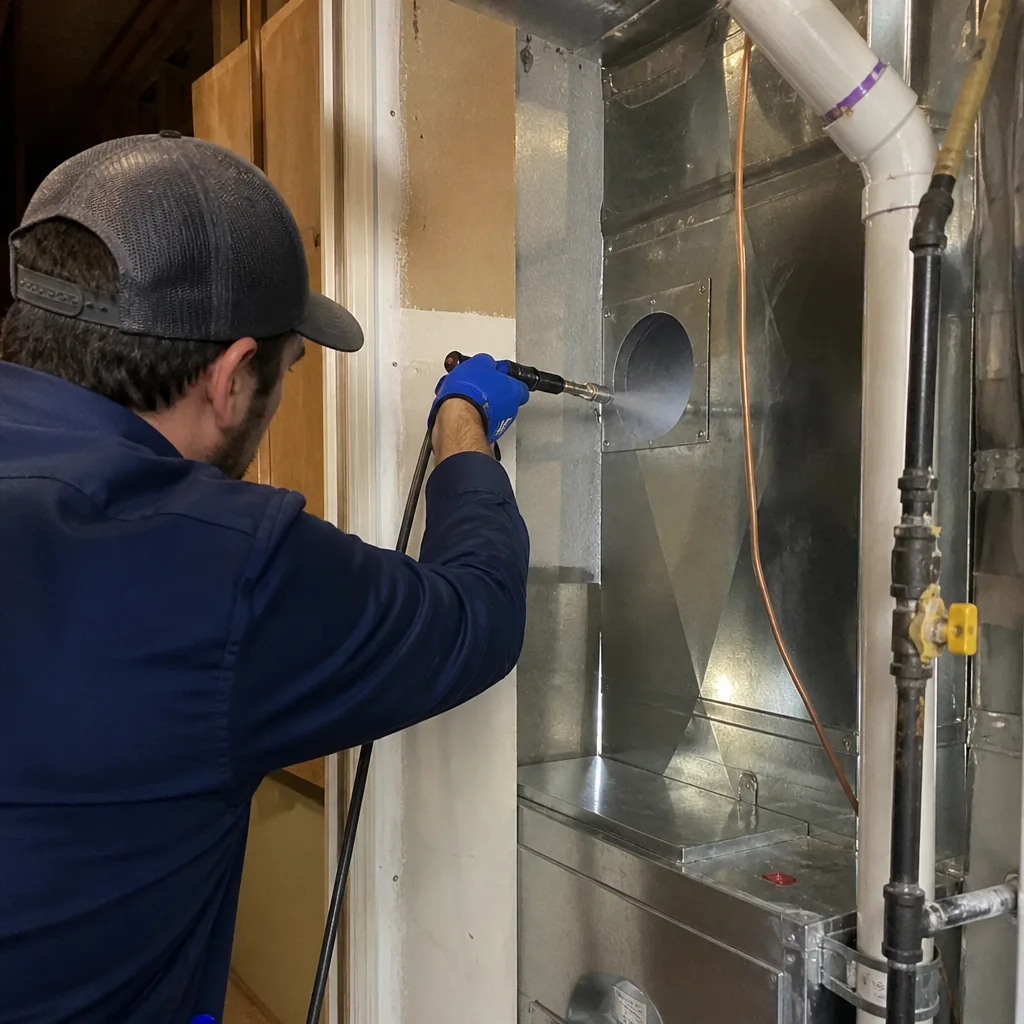
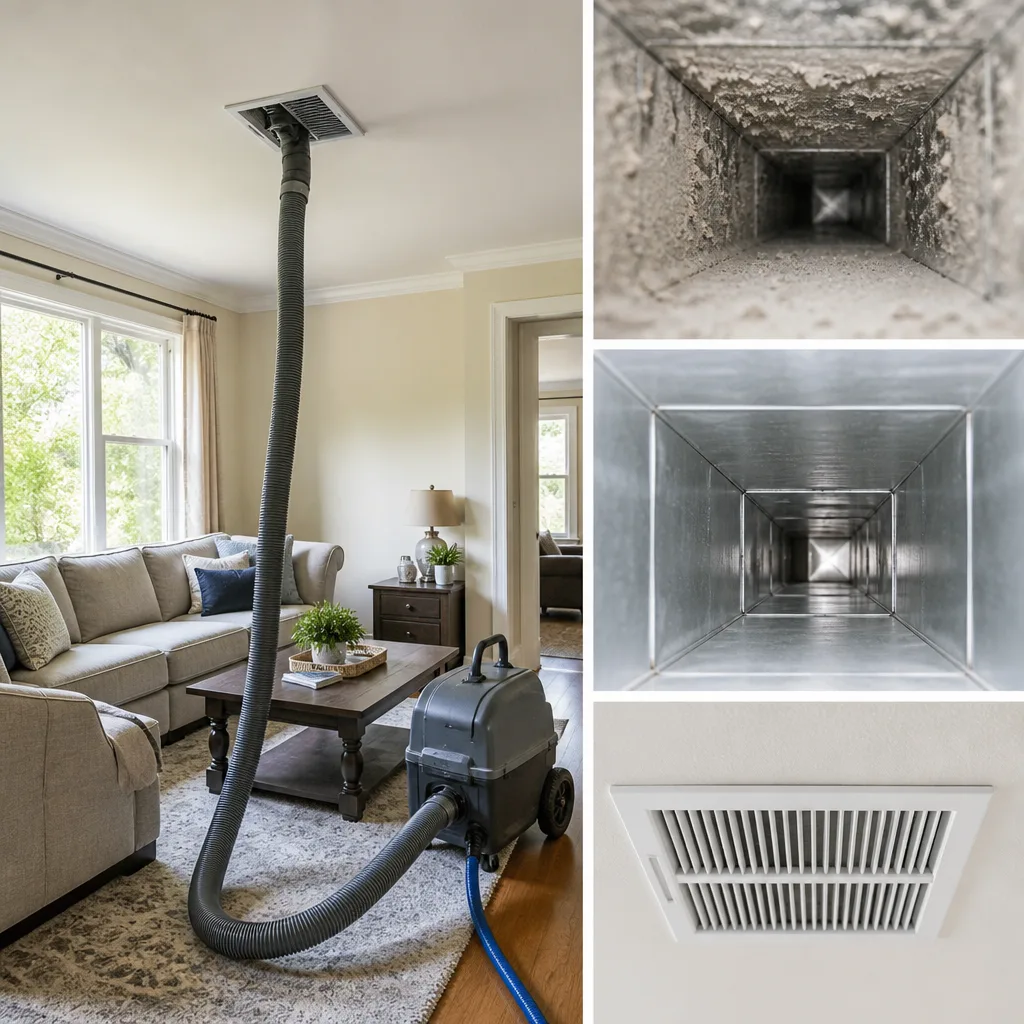 Whole-home duct cleaning
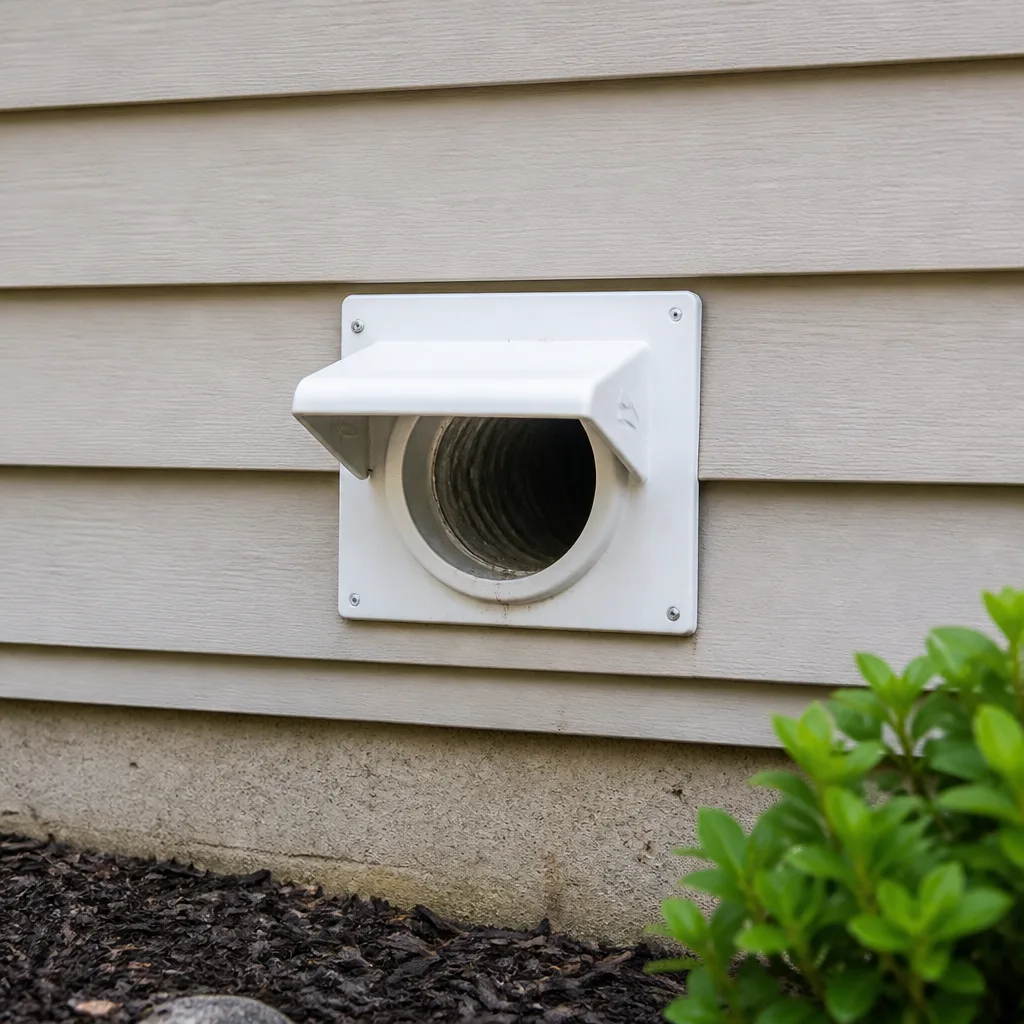 Dryer vent cleaning
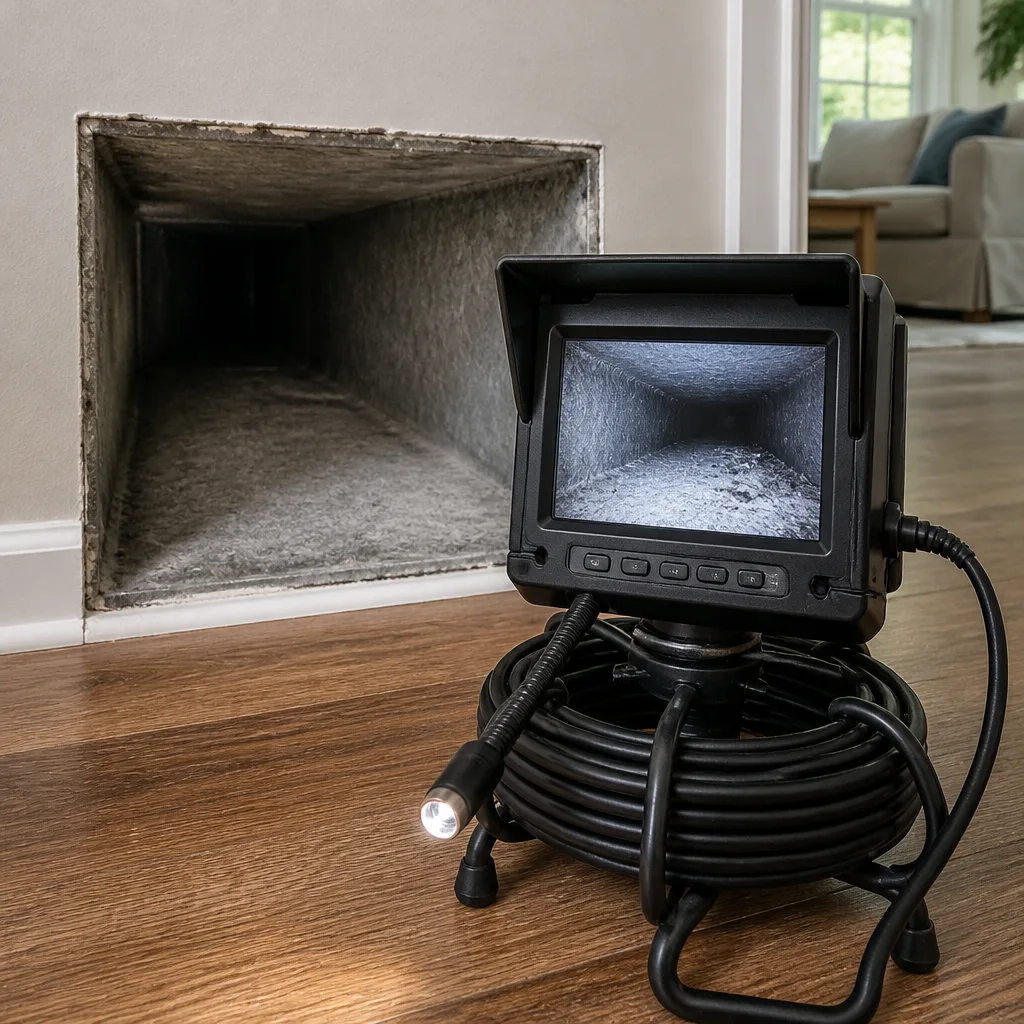 Camera inspection
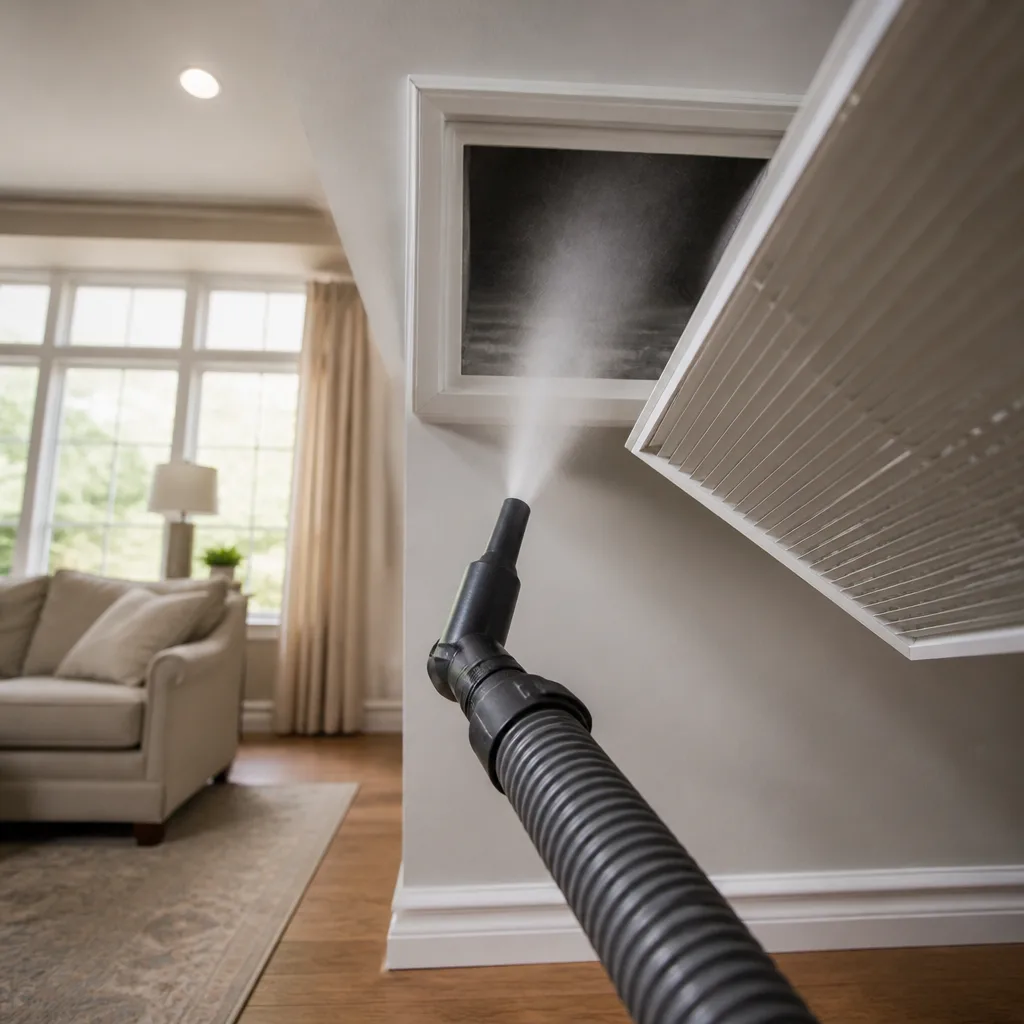 Sanitizing & deodorizing
Whole-system duct and dryer vent check with before-and-after photos - you see exactly what came out of your vents
That "$99 whole-house special" is a bait ad - the real number appears once they are in your hallway, or the "clean" is a shop-vac at the register. We photograph the inside of your ducts before and after instead.
Air Duct Cleaning Emergency Preparedness Guide for Kent Homes
Most homeowners think about duct cleaning as a maintenance chore, something to get around to eventually. In Kent, it’s closer to storm prep. The ground here moves, the summer sky turns brown with wildfire smoke, and the Green River lowlands still flood after a hard rain cycle. Each of those events pushes something into your duct system, and each one damages ductwork in a predictable, well-understood way. The homes that come through a bad event with clean air and working equipment are the ones whose owners planned for it before it happened. This guide walks through wildfire smoke protocol, post-earthquake inspection priorities, flood response, documentation for your insurer, and a simple go-kit for your HVAC system. Everything here is written for Kent homes specifically, because the local hazard mix shapes the advice.
Quick Answer
Air duct emergency preparedness in Kent means three things: switching your forced-air system to recirculation and upgrading your filter before wildfire smoke arrives, inspecting flex duct joints and the furnace plenum connection after any earthquake shaking, and checking ductwork for water contact within 48 hours of flooding. Photograph your system before and after every event, and keep spare filters, foil tape, and a flashlight stored with your system specs so you can act in the first hour instead of the first week.
Styles & brands we work with
- Whole-home duct cleaning
- Dryer vent cleaning
- Camera inspection
- Sanitizing & deodorizing
Table of Contents
- Wildfire Smoke: What to Do Before and During a Smoke Event
- After an Earthquake: Duct Inspection Priorities
- Flood and Water Intrusion: When to Clean and When to Replace
- What to Photograph Before and After an Event
- Build an HVAC Go-Kit Before You Need It
- How Long Contamination Lingers in Duct Liner
- Common Mistakes to Avoid
- When to Call a Professional
Wildfire Smoke: What to Do Before and During a Smoke Event
Wildfire smoke is the most frequent threat to duct systems in Kent, and the least understood. After the August 2023 smoke events, fine particulate levels in the South End stayed above 150 µg/m³ for several days running. Homes that kept their forced-air systems running through those days drew smoke straight into the ductwork. The filter caught some of it. The rest settled on duct liner, on blower wheels, and on the inside of the plenum, where it keeps recirculating every time the system runs. That’s the part most people miss: the smoke event ends, the sky clears, and the contamination keeps moving through the house for months.
Before the smoke arrives
- Upgrade your filter ahead of time. A MERV 13 filter is the practical ceiling for most residential systems in Kent. Higher MERV ratings can restrict airflow in older equipment, so check your system’s rated maximum and don’t exceed it.
- Seal the obvious gaps. Foil tape around the filter slot, the plenum seams, and any return duct joints you can reach. A filter only works if air goes through it, not around it.
- Photograph your filter and ductwork. A clean baseline photo taken before the smoke season gives you a comparison point afterward, which matters for both your own judgment and any insurance record.
During the smoke event
Switch your thermostat to recirculation. On most systems that’s the “fan on” or “circulate” setting with the fresh-air intake closed. Running recirculation keeps the system filtering indoor air instead of pulling outside air through the return. If your system has no recirculation option, or if the smoke is thick enough that indoor particulate is climbing anyway, shut the system down entirely and run a standalone HEPA unit in the room you use most. A duct system full of smoke-laden air is worse than no airflow at all.
After the smoke clears
Change the filter immediately, regardless of how new it is. Then inspect the return grilles and the blower compartment. If you see a gray or brown film on the liner or the blower wheel, the contamination has moved past the filter, and that’s the threshold where cleaning makes sense rather than just another filter change. For a full system assessment, our air duct cleaning service covers source removal with negative-pressure equipment, which is what’s needed once particulates have bonded to the liner.
After an Earthquake: Duct Inspection Priorities
Kent sits in a seismically active zone, and duct systems are among the first things to fail subtly after shaking. Subtly is the operative word. A disconnected flex duct joint doesn’t announce itself. The furnace still runs, the house still gets some heat, and the only clue is a room that never quite warms up or a dust line along a ceiling. In our experience, the homes that end up with real air quality problems after a quake are the ones where nobody looked for a month.
The three priorities, in order
- Flex duct disconnection at joints. Flexible duct is held together at splices with tape and zip ties. Shaking loosens both. Check every accessible joint in the attic, crawlspace, and basement, and pay particular attention to runs that cross from one structural bay to another. Look for tape that’s peeled, a joint that’s slipped apart, or sagging duct that’s lost its support.
- Plenum integrity at the furnace connection. The plenum is the box where the duct system meets the furnace. It carries the most pressure in the whole system, so a crack or separation here leaks into the mechanical space and pulls attic or crawlspace air into the living space. Look for gaps at the seams, displaced screws, or sheet metal that has buckled.
- Debris intrusion from attic insulation displacement. This is the one people forget. Loose-fill insulation spills off the attic floor during strong shaking, and any open duct joint or disconnected run becomes a funnel. Insulation fibers that get pulled into the supply side will show up in every room at once, usually as a fine gray dust on horizontal surfaces.
What to do if you find a problem
Shut the system off before you start poking at damaged ductwork. Then call for an inspection. Duct repair and sealing is a different job from cleaning, and it has to come first. Cleaning a system with an open joint just reintroduces the contamination. Our team handles both in the same visit, which matters after a quake because the damage and the debris usually show up together. If the shaking has been severe enough to move ductwork, it’s worth a call to PSE or your gas utility before you run the furnace again, separate from anything to do with the ducts.
If the assessment turns into a larger scope of work, our HVAC cleaning service covers the blower, coil, and cabinet alongside the ductwork, since quake debris tends to migrate into the air handler as well.
Flood and Water Intrusion: When to Clean and When to Replace
Low-lying areas around Kent, particularly near the Green River and the Mill Creek drainage, see periodic flooding, and water in a duct system is a different problem from water on a floor. Duct material doesn’t just dry out. Sheet metal begins to corrode at the seams and joints within days of contact, and the corrosion is often worse than the visible rust suggests because it starts inside the laps where you can’t see it. Fiberglass duct board is a different story entirely: the facing can dry, but the fiberglass core holds moisture and becomes a growth medium.
The 48-hour window
Both sheet metal and fiberglass duct board remain potentially salvageable if water contact is caught within about 48 hours and the system is dried properly. After that window, the odds of salvaging an interior liner or duct board core drop sharply. The practical rule we follow in Kent homes:
- Sheet metal with light surface moisture: dry, inspect seam corrosion, clean and seal. Usually salvageable if caught fast.
- Sheet metal with standing water or visible rust in the seams: replace the affected sections.
- Flex duct after any significant water contact: replace. The inner liner traps moisture and can’t be effectively dried.
- Fiberglass duct board with soaked core: replace. Cleaning doesn’t remove moisture from the substrate.
- Any ductwork that was submerged: replace, and have the air handler and blower inspected before restarting the system.
Restarting after a flood
Don’t run the system to “dry things out.” That pulls moisture and any biological growth through the supply side and into every room. Isolate the system, dry what you can access with fans and dehumidification, and get an inspection before you turn the furnace back on. If the floodwater was category 2 or 3 (anything with sewage or outdoor runoff in it), the standard in the trade is not cleaning but replacement, and your insurer will typically want documentation of the water line before anything is removed.
What to Photograph Before and After an Event
Insurance claims for duct system damage live or die on documentation, and most homeowners don’t have any. A claims adjuster can’t verify pre-event condition unless you photographed it, and can’t verify the extent of damage unless you photographed that too. The photos take fifteen minutes and can be the difference between a covered replacement and an argument.
Before any event (do this now)
- Photograph the furnace or air handler with its data plate visible, so model and serial are legible.
- Photograph the filter slot with the current filter in place, showing the MERV rating printed on the frame.
- Photograph every accessible duct run in the attic, crawlspace, or basement, focusing on joints and the plenum connection.
- Photograph the return grilles and supply registers in each room, with a coin or tape measure for scale.
- Photograph the manufacturer’s label on any duct board or flex duct you can reach.
After an event (before cleanup)
- Photograph the damage as-is, including the water line on ductwork or the separated joint, with something for scale.
- Photograph the debris inside the plenum or on the blower wheel before anyone touches it.
- Photograph the filter, held up to light, to show loading.
- Keep a written log: date, time, what you observed, and what you did.
- Have a professional inspection report added to the file. A written assessment with photos carries far more weight than a homeowner’s own record.
Our team provides before-and-after photos of your own ducts as part of any cleaning or repair job, which is exactly the documentation an adjuster wants to see. If you’ve already had an event and need a professional assessment, call us.
Build an HVAC Go-Kit Before You Need It
The first hour of any emergency is when the wrong decisions get made, mostly because the right tools aren’t in reach. A small, labelled box kept with your furnace solves that. It’s not elaborate. It just has to be there when the power’s out and you’re standing in the dark with a flashlight in your teeth.
What goes in the kit
- Spare filters in the right MERV rating. Two changes’ worth. Write the size (usually 16x25x1 or 20x25x1, but check yours) and the MERV rating on a piece of tape on the furnace so you can reorder without measuring in the dark.
- A roll of foil tape. The real foil HVAC tape, not duct tape. It’s the one you want for sealing a joint or a filter slot in a hurry.
- A good flashlight and spare batteries. A headlamp is better because it frees both hands while you’re working on ductwork in an attic.
- A printed copy of your system specs. Furnace model and serial, filter size and rating, and the date of your last professional cleaning. Keep this in a sealed bag so it survives water.
- A pair of work gloves. Duct liner is rough on hands, and so is attic insulation if you have to move it to reach a joint.
- A camera or phone with a charged battery. For the documentation step above, since the photos need to be taken before cleanup starts.
Where to keep it, and what to check once a year
Store the kit right next to the air handler, in a sealed plastic bin. Not in the garage, not in a closet across the house. It goes where you’ll need it. Once a year, check that the filters are still the right size, the batteries in the flashlight work, and the printed specs still match your system. Replace the filters after any smoke event or filter change, so the kit is always stocked when you need it.
How Long Contamination Lingers in Duct Liner
Longer than most Kent homeowners expect. Duct liner, the sound-absorbing material inside many residential ducts and plenums, is porous. Once smoke particulate or insulation dust settles into it, it stays there. Airflow moves the lightest particles around, but the material that’s bonded to the liner surface doesn’t just blow away with a good filter change. In our experience, a duct system that took in smoke during a heavy event will still show elevated particulate on repeated wipe tests for months afterward unless the liner is cleaned or the affected sections are replaced.
What this means practically
- A filter change takes care of airborne particles. It doesn’t clean the liner.
- Contamination in the liner keeps recirculating every time the system runs, which is why the “dusty house” complaint often follows a smoke event by weeks, not days.
- Mechanical cleaning with rotary contact equipment is the standard method for liner contamination, because surface brushing alone doesn’t get into the pores.
- Sanitizing after mechanical cleaning is sometimes appropriate, but it doesn’t replace cleaning; the contamination has to come out first.
For Kent homes that went through the August 2023 smoke events with the system running, an inspection this season is a reasonable step. If the liner is still loaded, cleaning brings it back to a clean baseline so the next event starts from neutral.
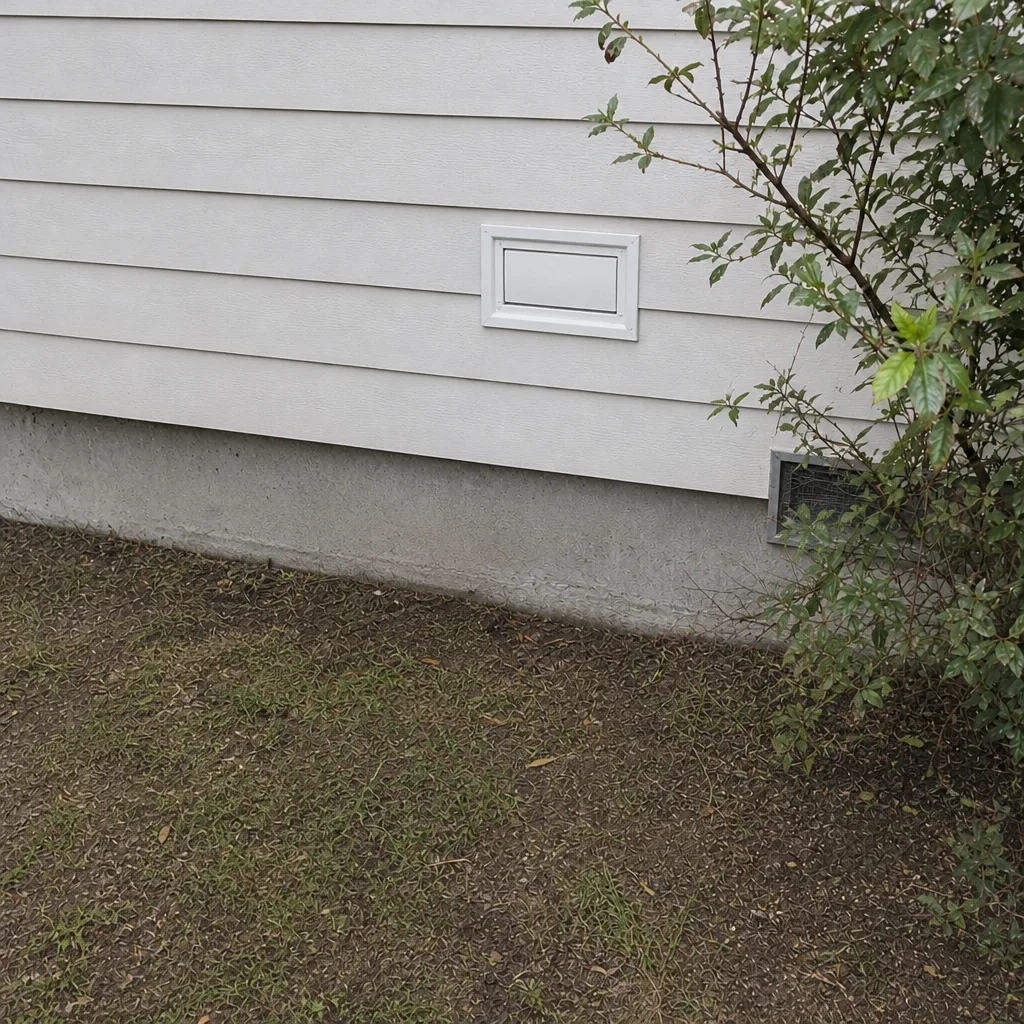
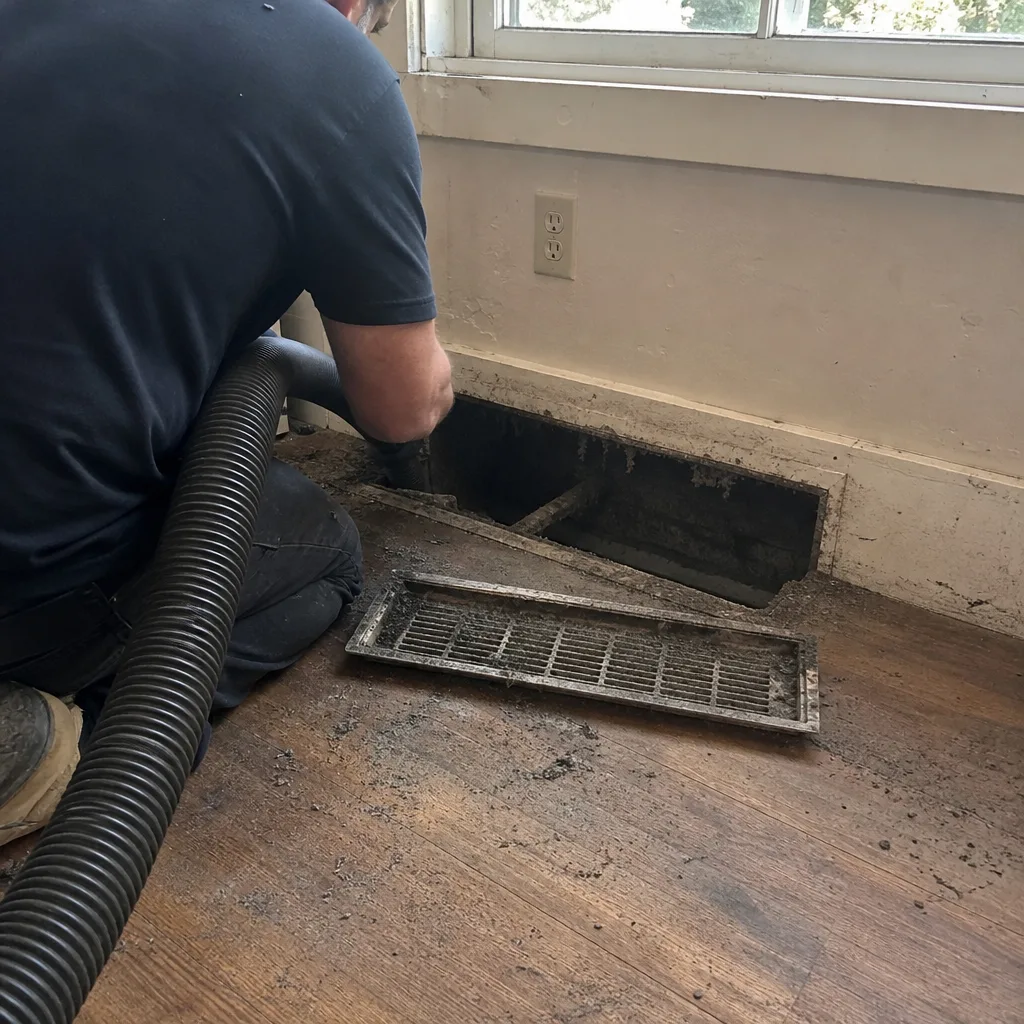
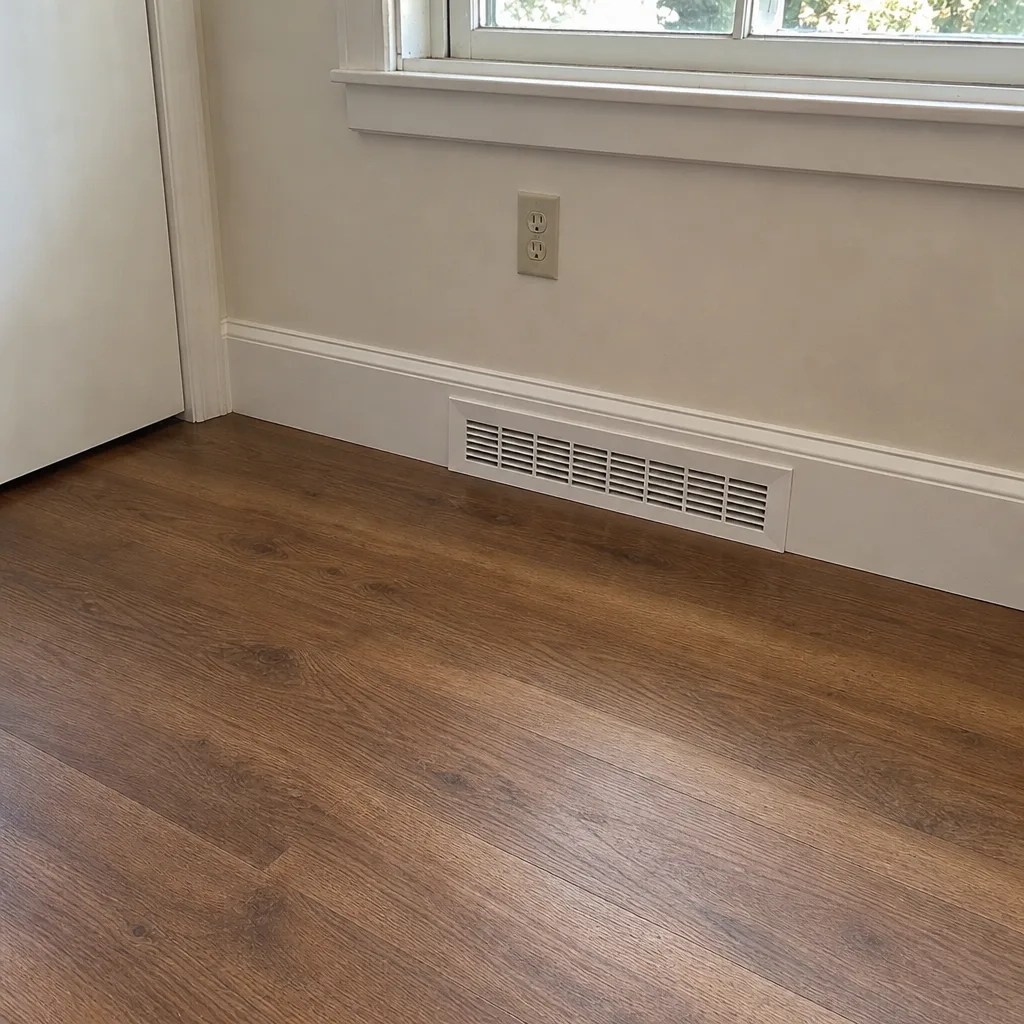
See the difference
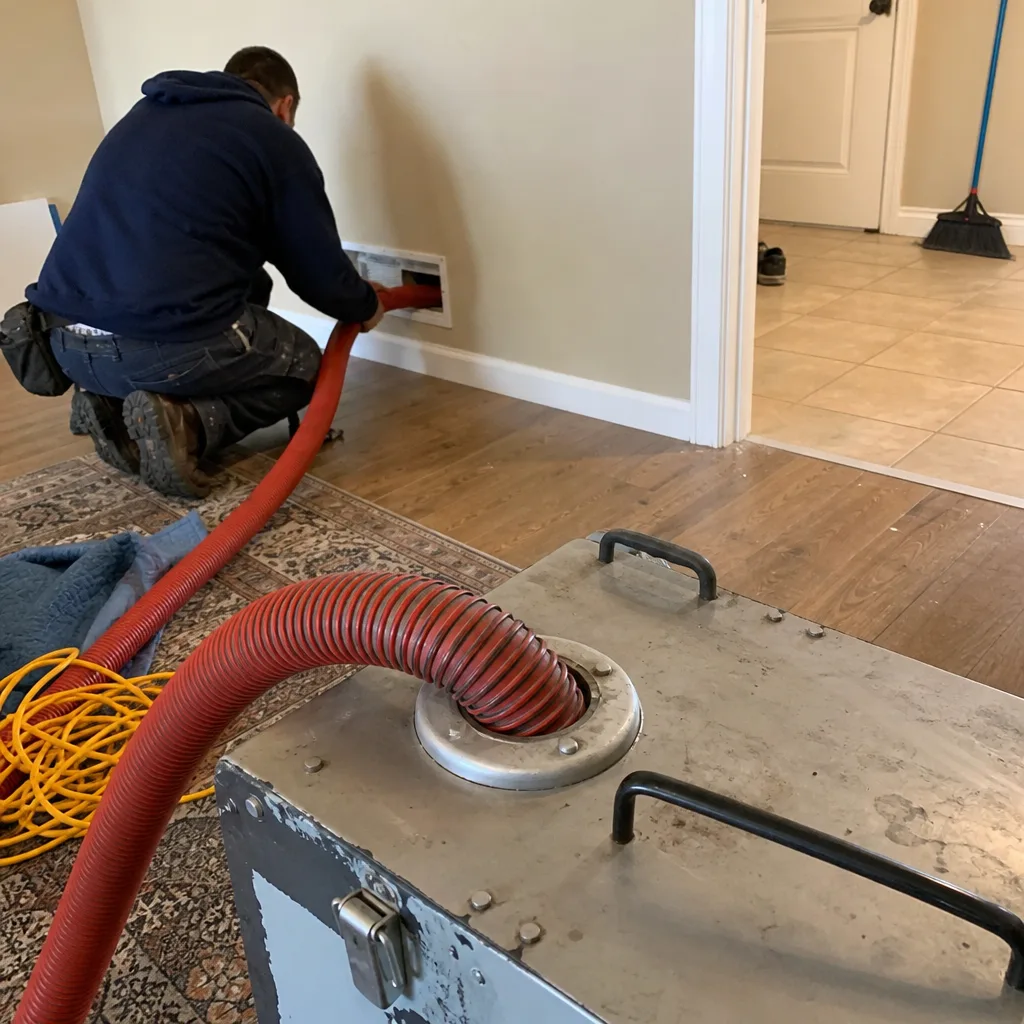 Before
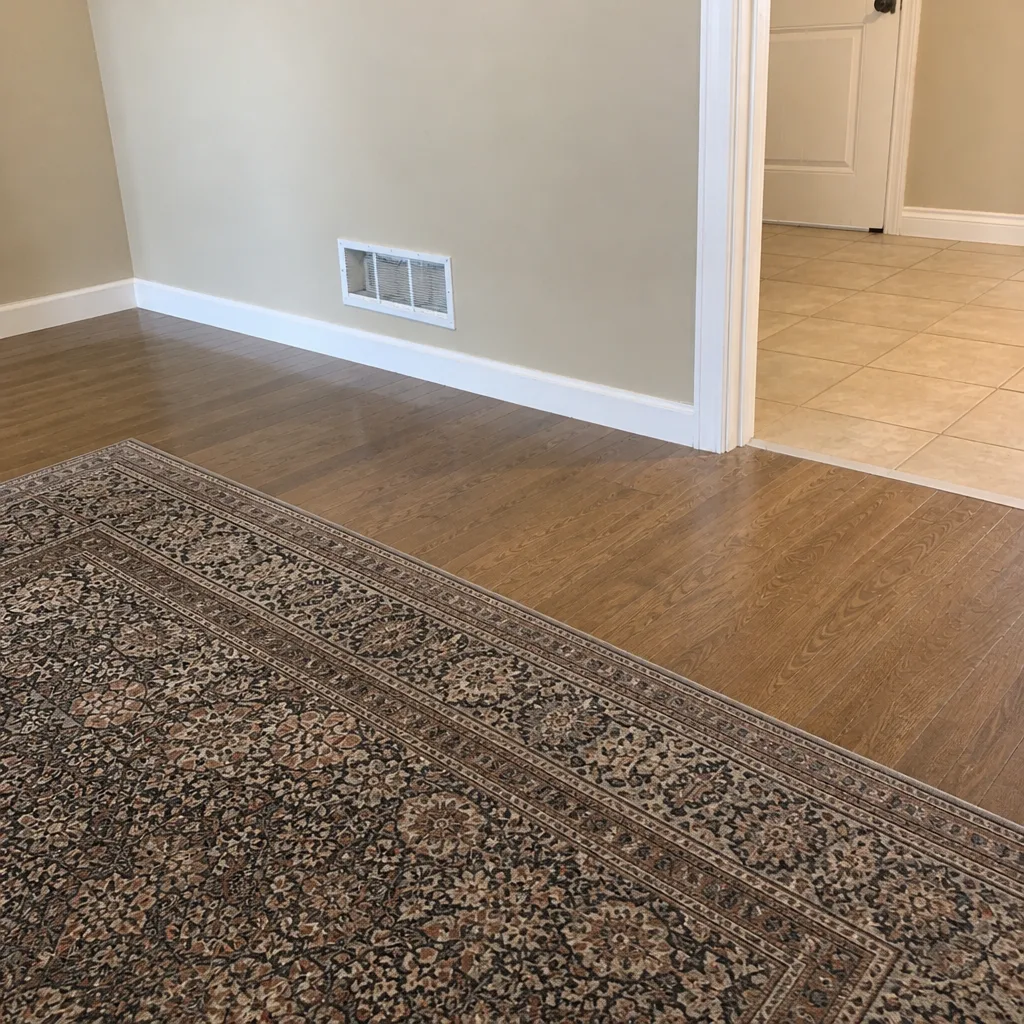 After
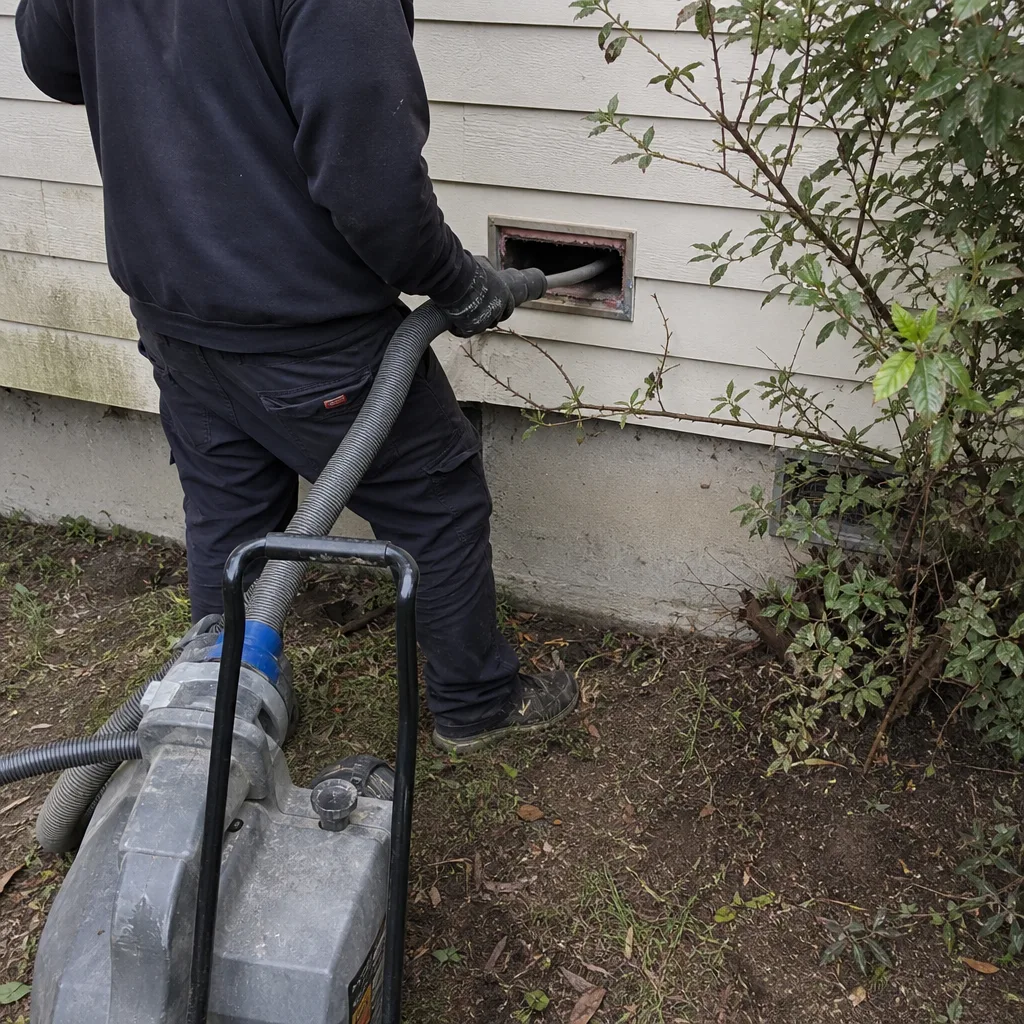 Before
 After
 Before
 After
Common Mistakes to Avoid
- Running the system through a wildfire smoke event with the fresh-air intake open. That’s the exact opposite of what you want, and it’s the most common cause of smoke loading in Kent ductwork. Switch to recirculation or shut the system off.
- Installing the highest-MERV filter you can find. Higher isn’t always better. A filter that restricts airflow can strain a residential blower, so stick to what your system is rated for, which for many Kent homes is MERV 13 at the top end.
- Assuming “the furnace still runs” means the ducts are fine. After earthquake shaking, a disconnected flex joint or a separated plenum won’t stop the system; it’ll just leak into the attic or crawlspace. Inspect the joints, not just the thermostat.
- Running the system to dry out after a flood. Moisture, silt, and potentially biological growth get pushed through every supply register in the house. Isolate the system and dry it with fans.
- Cleaning duct board that has been soaked. The fiberglass core holds water and doesn’t dry effectively, and cleaning doesn’t remove the problem. Replace the affected sections.
- Not photographing anything before cleanup. Once the debris is vacuumed out, the evidence is gone, and the insurance claim becomes a conversation instead of a documented record. Take the photos first.
- Hiring a cleaner who only cleans and can’t repair. If the quake or flood damaged the ductwork, cleaning before repair just sends the contamination back through the system. You need a company that can find, fix, and seal compromised ductwork in the same visit.
When to Call a Professional
Call a professional if the system ran during a heavy smoke event, if you’ve felt shaking strong enough to move anything in the attic or crawlspace, if ductwork has had any water contact, or if you’re seeing insulation dust on horizontal surfaces after a quake. Call immediately if the furnace plenum shows a crack or separation, if water reached the air handler, or if you can’t account for a room that’s suddenly not heating or cooling as well as it used to. Those are the cases where a DIY inspection can miss the real problem. Your ducts move air through every room in the house, and what’s in them matters more than most people think.
Kent Air Duct Cleaning Co offers free estimates in Kent. We use Rotobrush rotary contact cleaning systems and Nikro negative-pressure source removal equipment, with Abatement Technologies air filtration on site, and we repair and seal ductwork in the same visit when the inspection calls for it. Call (877) 792-7319 for a free estimate. We answer 24/7. Fast dispatch from 7am to 7pm, Sunday through Friday.
Frequently Asked Questions
Within a few weeks of the event, once the smoke has cleared and you’ve changed the filter. If you see a gray film on the return grilles or the blower compartment, or if the house stays dusty after the filter change, have the system inspected sooner. Call (877) 792-7319 for a free estimate, and we’ll tell you whether cleaning is needed or a filter change is enough.
Yes. Duct damage after shaking is usually invisible from the thermostat, showing up as a separated flex joint, a taped splice that has peeled, or a plenum gap that leaks into the attic. Inspect the accessible joints and the furnace plenum, and if anything looks off, have it checked. Call (877) 792-7319 to book an inspection.
Sheet metal sometimes can, if the water contact is caught within about 48 hours, and the seams are dry and free of rust. Flex duct and fiberglass duct board generally cannot, and need to be replaced. If the floodwater was category 2 or 3, replacement is the standard. Call (877) 792-7319 to have the system assessed before you restart it.
Your system as it sits now, before any event: the furnace data plate, filter slot with rating visible, and every accessible duct joint. After an event, photograph the damage as-is before cleanup, including the water line or separated joint, and keep a written log. A professional inspection report with before-and-after photos of your own ducts strengthens the file. Call (877) 792-7319 for an estimate on an inspection.
Only up to what your system is rated for, which is MERV 13 at the top end for most Kent homes. Higher than that can restrict airflow and strain the blower. Check the rating on your filter slot or the furnace label, and reorder to that spec. Call (877) 792-7319 if you’re not sure what your system is rated for.
The principles are the same (recirculation during smoke, joint inspection after shaking, isolation and assessment after flooding), but commercial systems are larger and the inspection scope is different. We handle both residential and commercial work with the same Rotobrush, Nikro, and Abatement Technologies equipment. Call (877) 792-7319 to discuss a commercial assessment.
The Bottom Line
Kent’s hazards are predictable enough to plan for. Wildfire smoke wants a MERV 13 filter, recirculation, and a system shutdown when smoke gets heavy. Earthquakes want a check of the flex duct joints and the plenum connection, plus a look at the attic insulation. Flooding wants a 48-hour window and an honest call on salvage versus replacement. Document everything with photos, keep a small go-kit by the air handler, and treat contamination in the liner as a cleaning-or-replace decision, not a filter decision. That’s the whole plan, and it’s a lot easier to execute now than in the middle of the next event. When you’re ready for an inspection, call Kent Air Duct Cleaning Co at (877) 792-7319 for a free estimate. We answer 24/7. Fast dispatch from 7am to 7pm, Sunday through Friday.
Written by the team at Kent Air Duct Cleaning Co.