
Last updated November 23, 2026
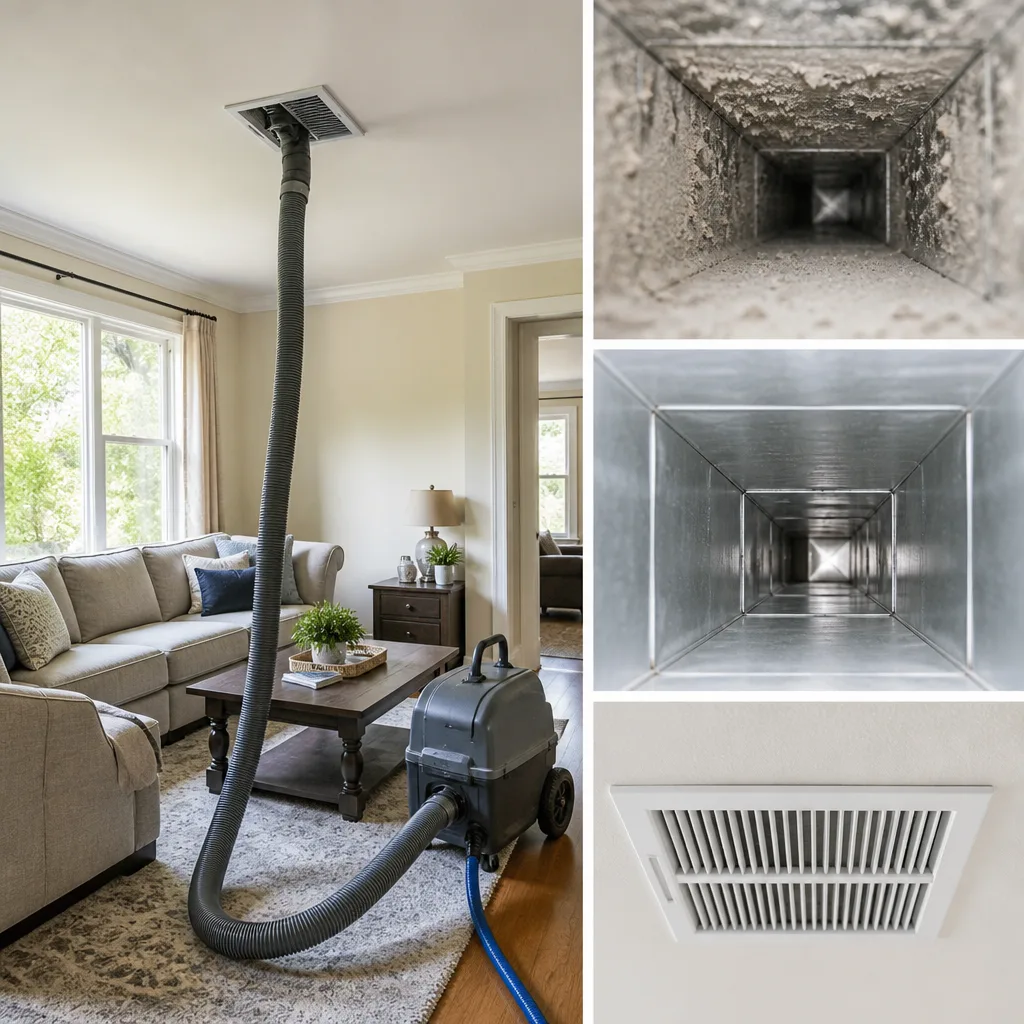 Whole-home duct cleaning
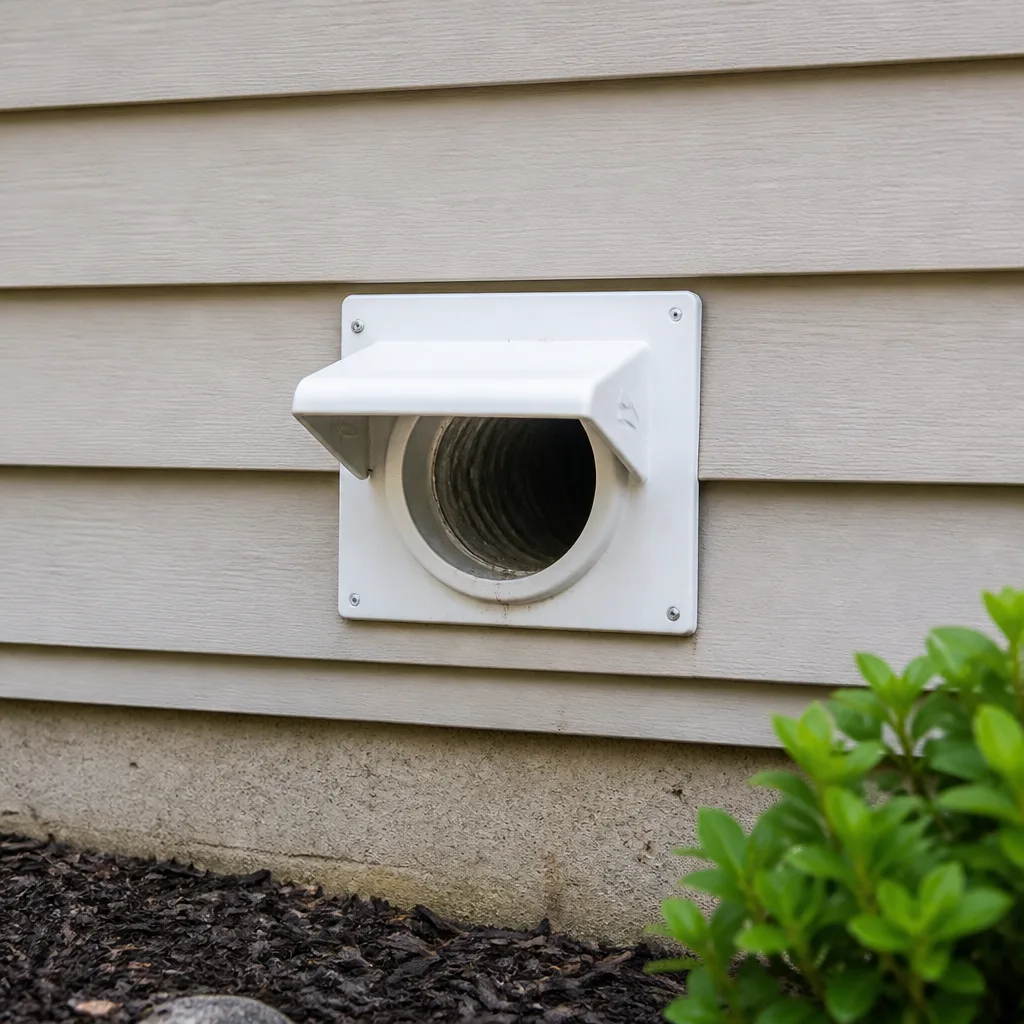 Dryer vent cleaning
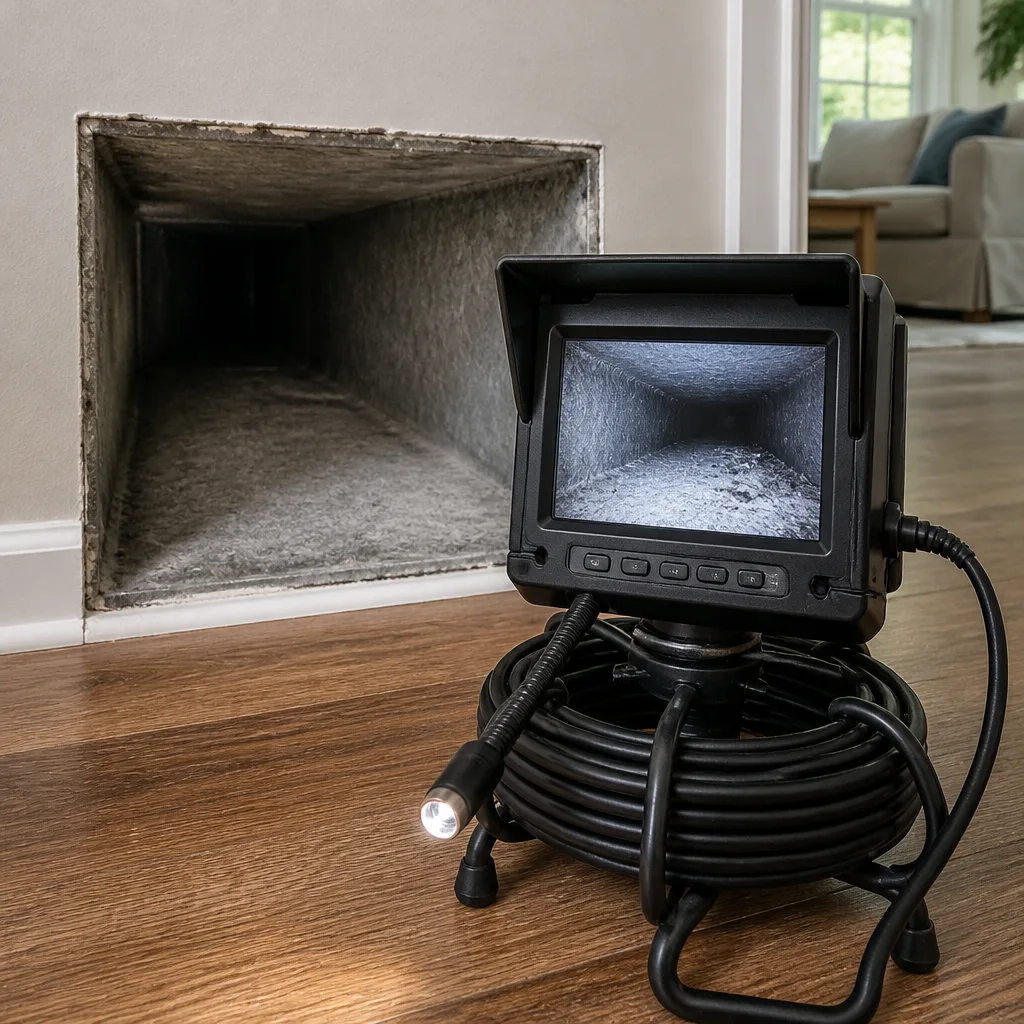 Camera inspection
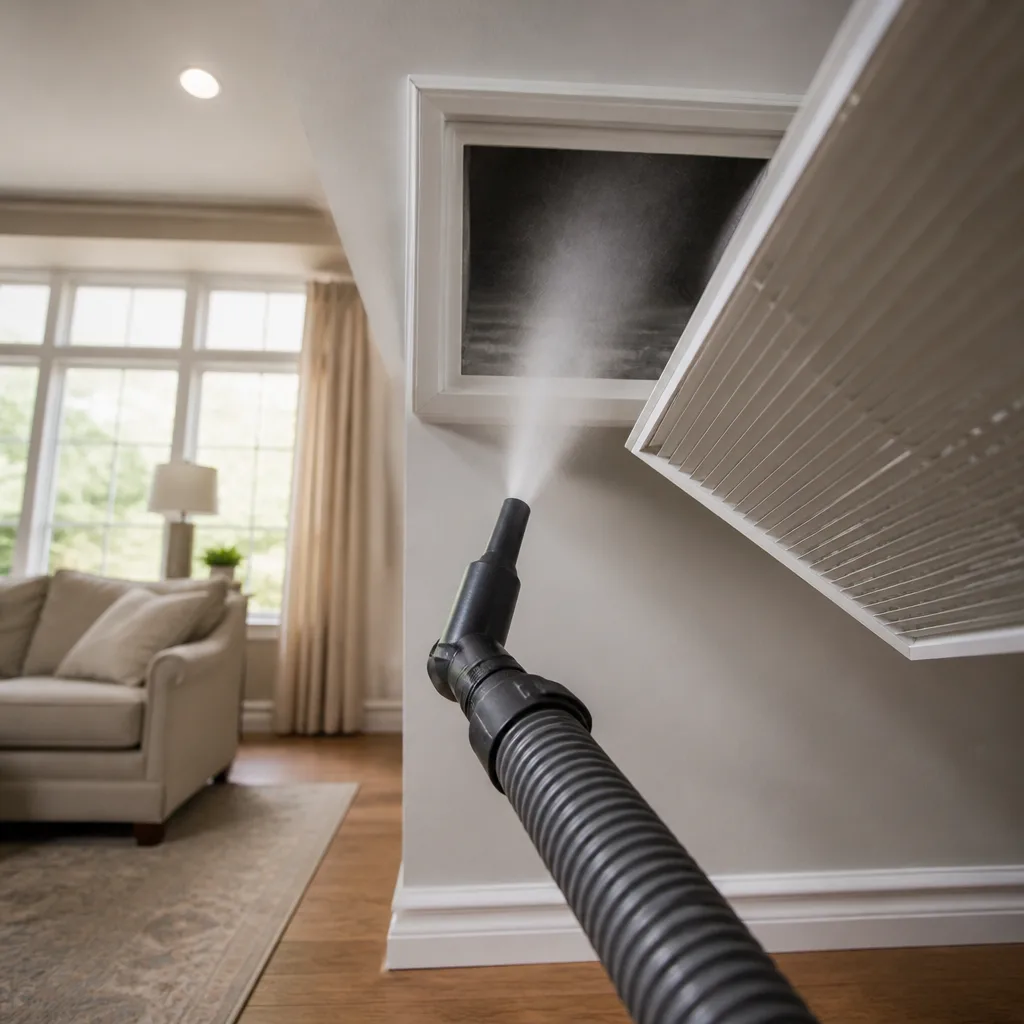 Sanitizing & deodorizing
Whole-system duct and dryer vent check with before-and-after photos - you see exactly what came out of your vents
That "$99 whole-house special" is a bait ad - the real number appears once they are in your hallway, or the "clean" is a shop-vac at the register. We photograph the inside of your ducts before and after instead.
Air Duct Cleaning Cost Breakdown: The Kent Homeowner’s Reference for 2026
The coupon in your mailbox says $99. The quote from the company that actually brought commercial equipment says $750. Both are real numbers in the Kent market, and the gap between them is not greed on one side or a bargain on the other. It’s scope. A $99 offer typically buys four to six supply registers and a portable vacuum. The trunk line, the return system, the plenums, and the coil aren’t in that price. They’re either excluded outright or pitched as add-ons once the technician is standing in your hallway. This guide breaks a Kent duct cleaning bill down line by line: what each component costs to actually perform with professional-grade equipment, how your home’s size and layout move the number, and how to read a written estimate so you’re comparing equal jobs instead of comparing headlines.
Quick Answer
A legitimate full-system air duct cleaning in Kent typically runs $450 to $1,200 in 2026, with most single-family homes landing in the $600 to $900 range. That price should cover every supply and return, the trunk line, the plenums, the blower compartment, and a source-removal vacuum held under negative pressure for the duration of the job. Anything under about $250 is almost always a partial job at a per-vent rate, and anything over $1,500 usually means a real add-on like duct sealing or sanitizing is included. The written estimate sets the final price, per job, before work starts.
Styles & brands we work with
- Whole-home duct cleaning
- Dryer vent cleaning
- Camera inspection
- Sanitizing & deodorizing
Table of Contents
- Why Do Duct Cleaning Quotes in Kent Vary So Much?
- What Does a Full-System Clean Actually Include?
- How Do Home Size and Duct Access Change the Price in Kent?
- What Do Sealing, Sanitizing, and Dryer Vent Cleaning Add?
- How Do You Compare Three Quotes on Equal Footing?
- What Are the Red Flags in a Duct Cleaning Estimate?
- How Does Kent’s Climate Affect Duct Condition and Cost?
- What Can You Check Yourself Without Calling Anyone?
Why Do Duct Cleaning Quotes in Kent Vary So Much?
Because they aren’t quoting the same job. The phrase “air duct cleaning” gets used for everything from wiping visible registers with a rag to a full mechanical contact clean of the entire air delivery system under negative pressure. When you see three quotes for $99, $450, and $1,100, you’re usually looking at three different scopes, not three prices for one thing.
Here’s what actually drives the spread in the Kent market:
- Per-vent versus whole-system pricing. Per-vent pricing is the single biggest reason quotes diverge. A per-vent price looks cheap because the trunk line and the return system are billed separately, or not at all.
- Equipment. A portable shop-style vacuum can be carried in one hand. A Rotobrush rotary contact cleaning system and a Nikro negative-pressure vacuum are a two-person setup with real setup time. That difference shows up in the labor line.
- Access. A home with a basement and accessible plenums is a different job from a crawlspace home with duct runs under the floor.
- Whether anything gets repaired. Many companies clean only. Cleaning a system that has disconnected or leaking joints means you’ve cleaned a system that still leaks air into a crawlspace. Duct repair and sealing is a separate line item, and it’s one that changes the number in a way that saves you money on the energy side.
- Containment. Filtration equipment such as Abatement Technologies units running on-site is a cost to the contractor. It’s also what keeps the dust you’re paying to remove from drifting into your living room.
In our experience, the written estimate is where you see which of those you’re actually buying. A quote with a component list is a quote you can compare. A quote with one number and the words “full system” is not.
What Does a Full-System Clean Actually Include?
A full-system clean should touch every part of the air delivery path, in a defined sequence, with the vacuum running before the first tool goes in. That’s the difference between cleaning ducts and cleaning the air in your house.
- Inspection and setup. The technician maps the system, opens access points, and sets negative pressure with the Nikro vacuum at the main trunk. The Abatement Technologies filtration unit stays on-site to protect indoor air quality during the job.
- Supply branch cleaning. Each supply run gets mechanical agitation with the Rotobrush rotary contact system, driven toward the vacuum. This is where the debris actually leaves the duct, not just moves around inside it.
- Trunk line and plenums. The main trunk and both plenums (supply and return) get cleaned. This is the piece cheap quotes skip, and it’s usually where the heaviest buildup is.
- Return system. Returns carry dust back to the air handler. Clean supplies feeding a dirty return is a system that re-dirties itself.
- Blower compartment and coil face. The air handler’s blower wheel and the accessible face of the evaporator coil get cleaned so the system doesn’t push debris straight back into clean ducts.
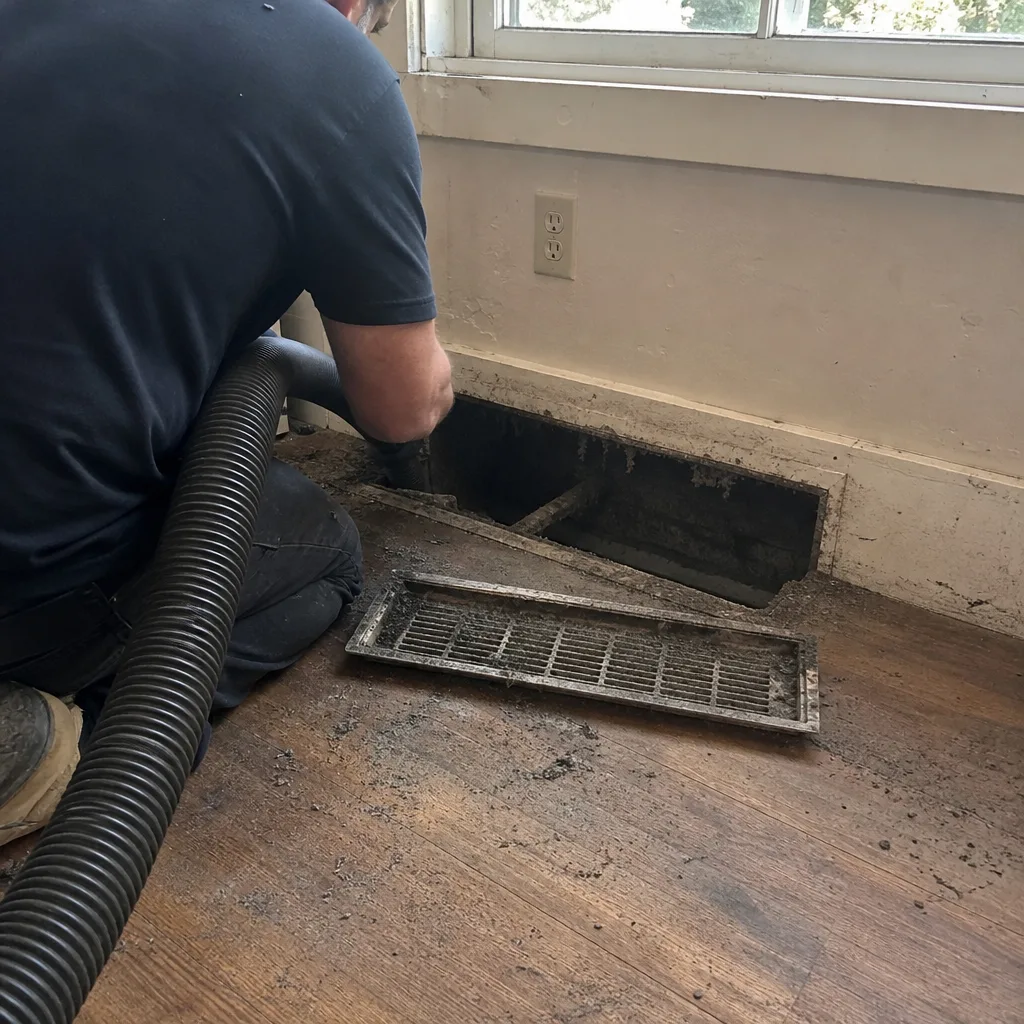
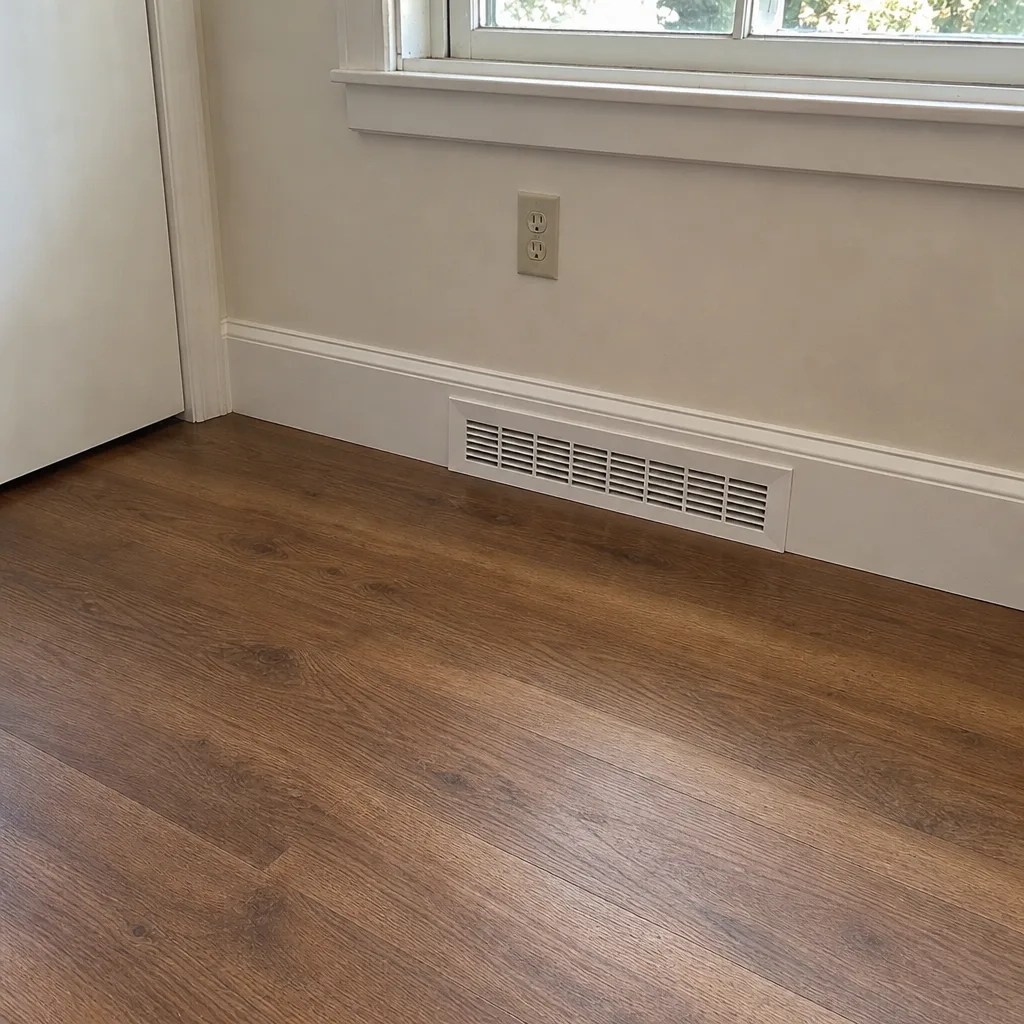
- Final visual check and photos. Before-and-after photos of your own system, so you can see what was removed.
That’s the scope that should appear, component by component, on the estimate. When we quote air duct cleaning in Kent, the estimate lists each of those lines individually rather than one lump figure, so you can see where a lower quote was doing less work.
How Do Home Size and Duct Access Change the Price in Kent?
Two homes with the same square footage can price $200 apart, and layout usually explains the difference. Access and story count matter as much as raw size.
What moves the number in Kent homes:
- Story count. A two-story home typically has a longer trunk and more vertical runs, which means more access points and more time under negative pressure.
- Crawlspace runs. A lot of Kent homes have ductwork under the floor in a crawlspace. That’s not harder to clean through, but finding and opening the access points takes more time, and the technician is working in a tighter space.
- Basement or utility-room plenums. The easiest configuration: plenums and air handler are right there and accessible. This is where full-system quotes land on the lower end.
- Attic runs. Access is the constraint. Each run may need a separate opening up top, and any attic work is done from stable footing with care.
- Number of registers. More registers means more branch runs. This is the one number a per-vent quote captures and a whole-system quote already includes.
- Age of the system. Sealed or unsealed joints, flex versus rigid duct, and whether previous work left access points open all affect how much prep time a job needs.
A rough map for Kent pricing in 2026: smaller single-story homes tend to land in the $450 to $600 band, typical two-story homes with 12 to 20 registers in the $600 to $900 band, and larger homes or properties with multiple systems in the $900 to $1,200 range. Homes with complex attic access or multiple air handlers can sit above that. The written estimate is what counts.
What Do Sealing, Sanitizing, and Dryer Vent Cleaning Add?
This is where an honest estimate and an aggressive one part ways. Some add-ons are genuinely necessary and some are sold on fear. Knowing which is which keeps your bill honest.
Duct repair and sealing
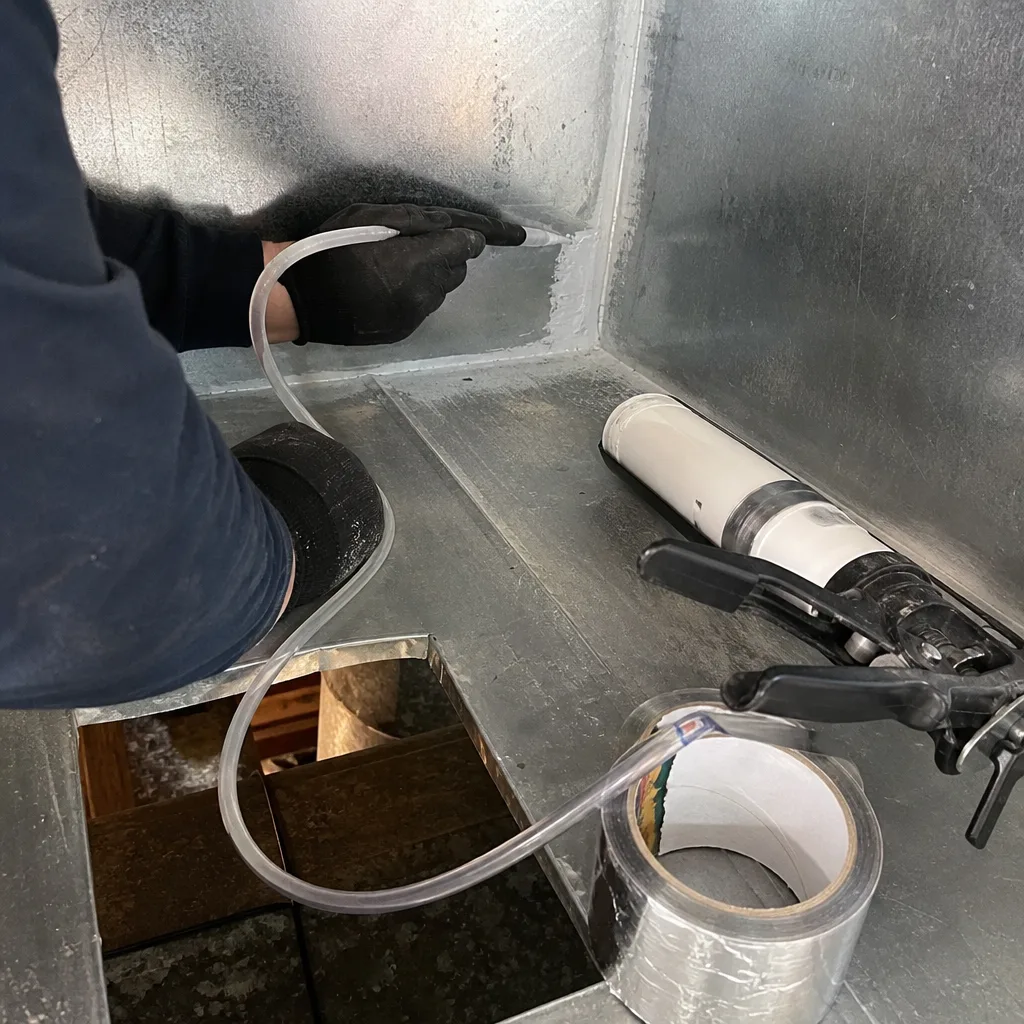
Leaky or disconnected joints waste conditioned air and pull crawlspace air into your living space. Sealing is a real fix, and it’s the one service most cleaners don’t offer. A company that cleans but leaves your system leaking has done half a job. If the technician finds a disconnected flex run or a joint that’s pulled apart, repair and sealing in the same visit is worth the added cost, both for air quality and for what you’re paying to heat the house.
Sanitizing
Sanitizing is worth it when there’s a verified problem: visible microbial growth, persistent musty odor that returns after cleaning, or water damage in the system. It’s not worth it as a default add-on on every job. Ask whether the tech actually observed the problem or is selling a precaution. Cleaning, sealing, and sanitizing are three distinct steps, and the estimate should separate them.
Dryer vent cleaning
A separate system, and a genuinely important one. Lint buildup in a dryer vent is a leading cause of residential fires, and a dryer whose vent is clogged runs longer, handles clothes worse, and costs more on the utility bill. It’s often bundled because it’s the same trip. You’ll want dryer vent cleaning on its own schedule regardless of what your ducts are doing.
Air quality products
Filtration and humidity control are a real upgrade in Kent’s climate. Companies authorized to supply and install Honeywell and Aprilaire products can extend the clean system’s benefit with proper filtration and humidity control rather than adding a gadget. Ask what it does, what it costs annually to maintain, and whether it’s a want or a need for your home.
How Do You Compare Three Quotes on Equal Footing?
Don’t compare headline prices. Compare line items. A $400 quote that covers registers only and a $700 quote that covers the whole system aren’t the same job at two prices; they’re two different jobs.
Use this checklist on each written estimate:
- Does it list each component separately? Supply branches, trunk, return, both plenums, blower compartment, coil face. If any are missing, ask before you compare.
- Is the price per system or per vent? Per-vent pricing means the trunk and returns are probably excluded or extra.
- What equipment is named? A named, professional system is a sign the quote is a real mechanical clean. A quote that names no equipment should make you ask.
- Is negative pressure mentioned? Source removal under negative pressure is the technique; without it, debris just gets spread.
- Are repair and sealing included or optional? Know which you’re buying so a mid-job upsell doesn’t surprise you.
- Are photos included? Before-and-after photos of your own system are how you confirm the work happened.
- Is the price fixed? One flat price per system, agreed before work starts, is the standard that protects you from step-by-step additions.
When you line three written estimates up against that list, the spread usually collapses into something you can actually read. For foundational information on the whole-system scope, the Kent Air Duct Cleaning Co service overview covers what a complete job looks like from the intake side.
What Are the Red Flags in a Duct Cleaning Estimate?
Most of them are in the language, not the number. Here are the ones we see homeowners bring us, and why each one matters.
- The vague “full system” line. If the estimate doesn’t name each component, “full system” is a phrase, not a scope. You can’t confirm what wasn’t done if you don’t know what was promised.
- Per-vent pricing as the headline number. Per-vent is fine if the trunk and returns are listed separately. If they aren’t, you’re buying the visible parts only.
- Teaser pricing with the real cost added on-site. A coupon price that balloons once the tech is inside is the most common complaint in this trade. Ask for one flat price per system, in writing, agreed before work begins.
- No equipment named and no access points listed. Cleaning without access to the trunk and plenums isn’t a clean; it’s a surface wipe.
- Sanitizing pitched as mandatory. Sanitizing is a targeted treatment, not a default. Ask what problem the technician observed.
- No before-and-after photos. If the work is real, showing it is easy. If the estimate doesn’t promise photos, ask why.
- A quote that doesn’t address repairs. If a company can’t seal a disconnected run or fix a joint that’s come apart, you’ll be paying to clean a system that still leaks into the crawlspace.
The flip side is a written estimate with a component list, a named vacuum and rotary contact system, a fixed price, and a promise of photos. That’s the shape of a quote you can trust and compare. Budgeting for HVAC cleaning alongside a duct clean is also worth considering, since the air handler and coil are where a lot of the system’s debris ends up.
How Does Kent’s Climate Affect Duct Condition and Cost?
Kent’s wet, mild climate shapes what shows up in ductwork and, in turn, what a clean costs. Our rainy months keep indoor humidity elevated for long stretches, and homes that stay closed up during the wet season trap moisture in the air path. Duct systems in crawlspace homes are especially exposed: a crawlspace that takes on damp air can push moisture into the ducts above it.
What that means for cost:
- Moisture-driven growth is a possibility, not a guarantee. If a technician sees or smells a problem, sanitizing is a real line item. If not, it’s a precaution and should be priced as optional.
- Humidification controls matter here. A home with a properly set humidifier and clean filter often needs duct cleaning less often than a home fighting dampness. Aprilaire humidity control is a real tool for this climate, not a sales flourish.
- Crawlspace repair is often the hidden cost. Sealing leaks and reconnecting flex runs under the floor is where a Kent-weather duct system gets its longevity. Repair and sealing in the same visit beats a repeat call in the spring.
- Late fall is a common booking window. Homeowners often schedule before the heating season rather than mid-winter, which can affect how quickly you get an appointment.
The result is a Kent price map where the base clean is the base clean, and the real variation comes from whether repairs and sealing are needed once the technician is inside.
What Can You Check Yourself Without Calling Anyone?
You can gather useful evidence without opening a single duct, and it’ll make your estimate more accurate. It won’t, and shouldn’t, replace a professional inspection when a real problem is present.
- Look at a supply register. A light dust film is normal. A visible mat of debris, or dust falling out when the system runs, is worth a call.
- Check the return grille. A return that’s visibly dirty on the grille side is pulling that material into the system.
- Note musty odor. If a smell that isn’t “just dusty air” comes from the registers, it’s worth having the system looked at.
- Compare filter life. A filter that clogs much faster than it used to suggests a system pulling more debris from somewhere.
- Watch your energy bills. Rising bills with no other explanation can point to a leaking system, which is a repair question, not just a cleaning one.
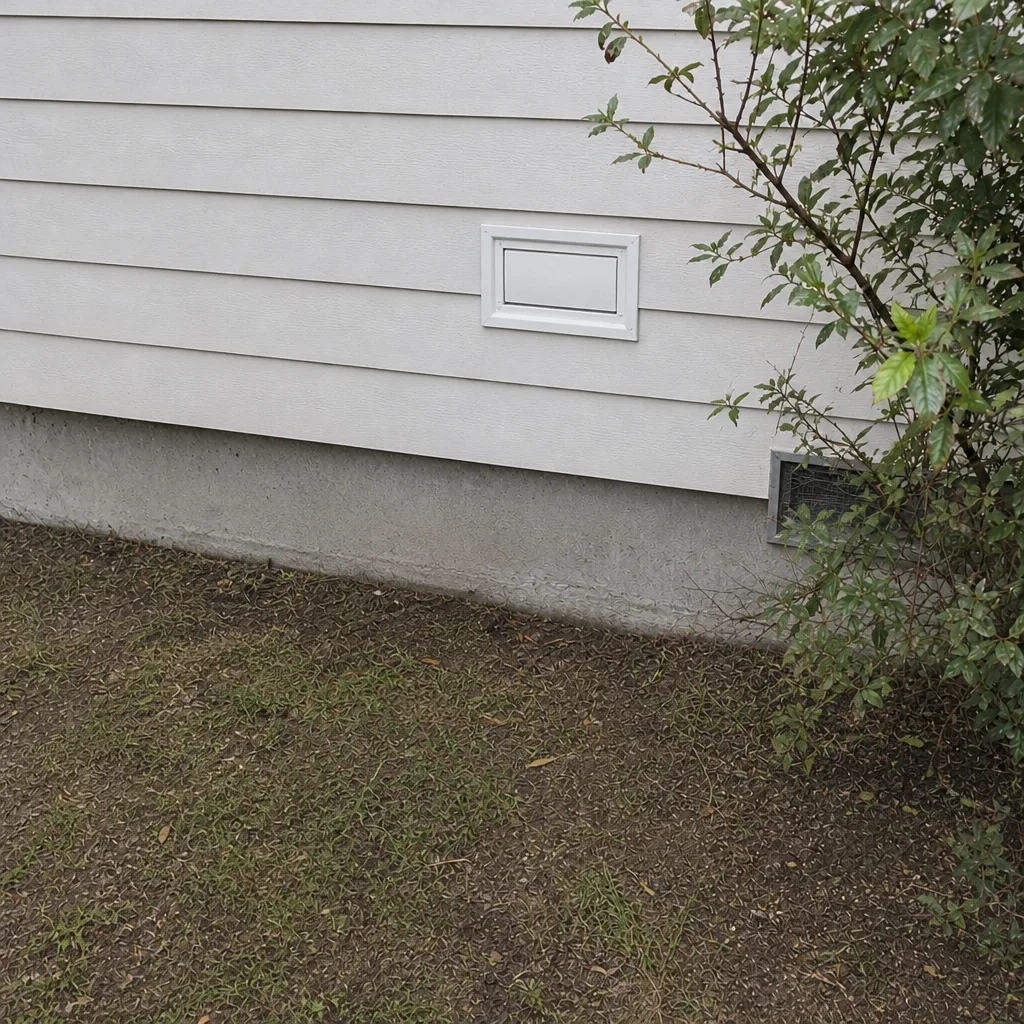
- Check the dryer vent on the exterior. A flap that barely opens, or a lint trail around the exterior vent, is a sign to address the dryer vent soon.
What you shouldn’t do is open ductwork yourself, especially in a crawlspace or attic. Ducts are the air path for your entire house; disturbing them carelessly moves debris into your living space, and working in confined or elevated areas carries real injury risk. That part is a job for someone with the equipment, containment, and training to do it safely.
Common Mistakes to Avoid
- Choosing the cheapest quote on a single number. The lowest number is usually a partial scope. A $99 quote and a $700 quote aren’t competing on price; they’re competing on scope, and you want to know which one you’re actually buying.
- Accepting “full system” with no line items. If the estimate doesn’t list components, ask for a revised one. A written estimate you can’t read line by line is a written estimate you can’t hold anyone to.
- Letting a coupon become the whole conversation. A teaser price that triples inside the home is the industry’s real problem. Insist on one flat price per system, agreed in writing before work starts.
- Cleaning without addressing leaks. If your ductwork has a disconnected run or a joint that’s come apart, a clean is temporary. Repair and sealing should at least be checked and quoted.
- Buying sanitizing on every job. Sanitizing is a targeted treatment for a real problem. Ask what the technician observed before you approve the line item.
- Forgetting the dryer vent. Lint buildup is a genuine fire risk, and it’s a separate system with its own schedule. When you book a clean, ask about the dryer vent in the same conversation.
- Forgetting access and layout when you compare sizes. A 2,000-square-foot two-story home with attic runs is a bigger job than a 2,000-square-foot single-story on a basement. Comparing square footage alone isn’t comparing scope.
See the difference
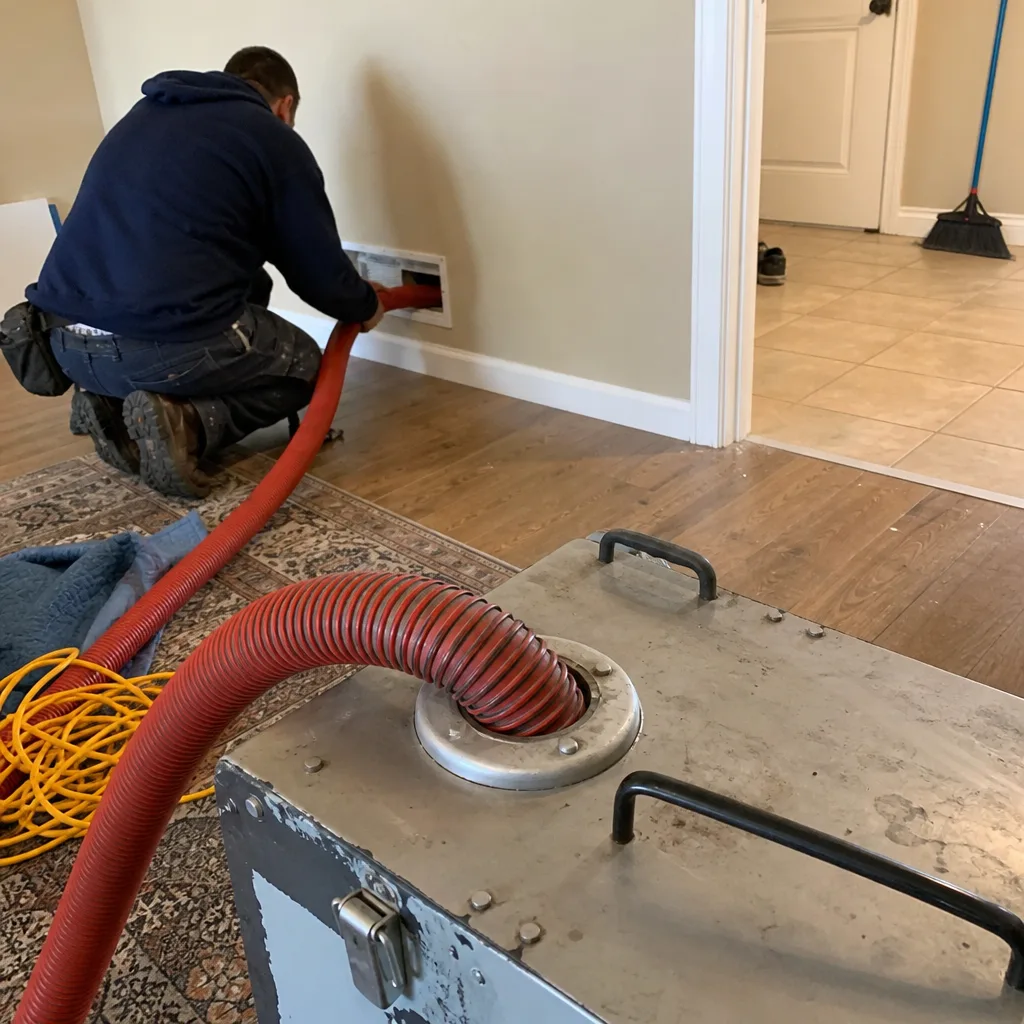 Before
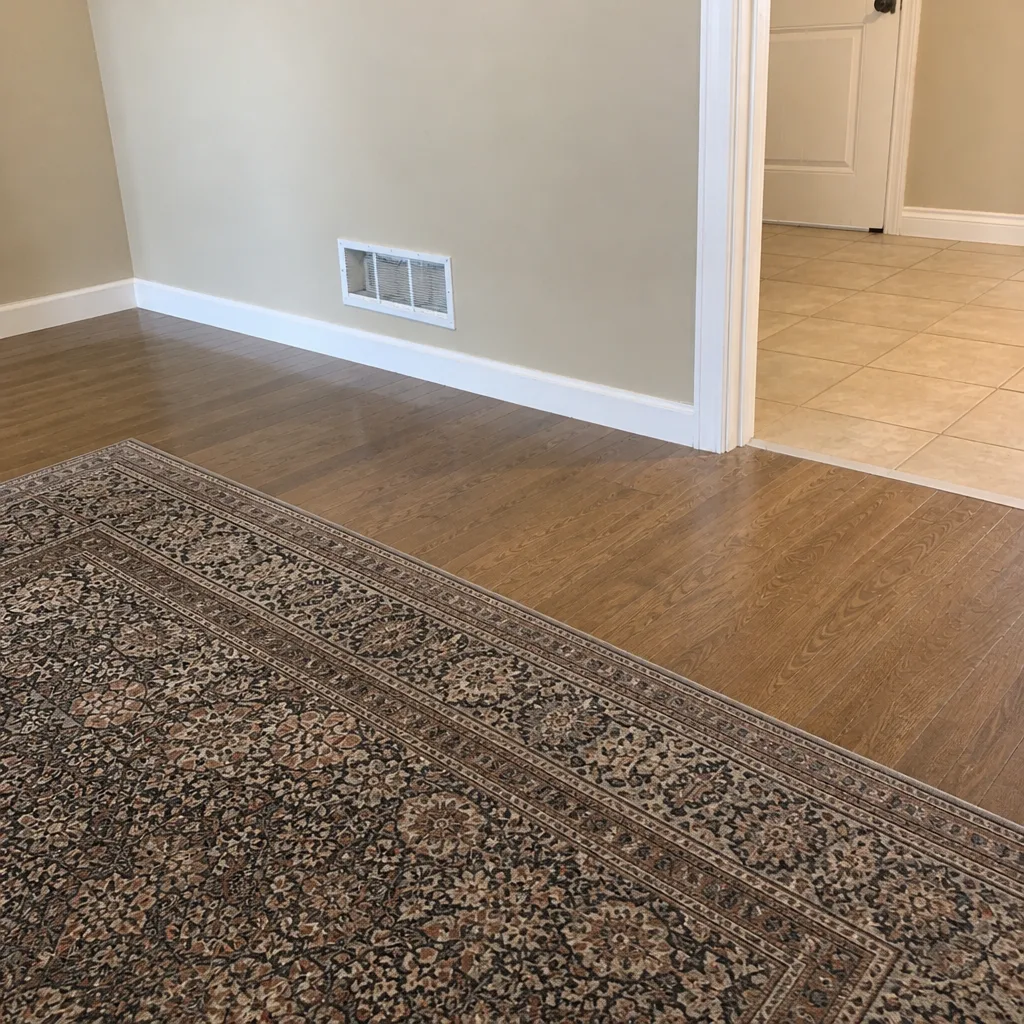 After
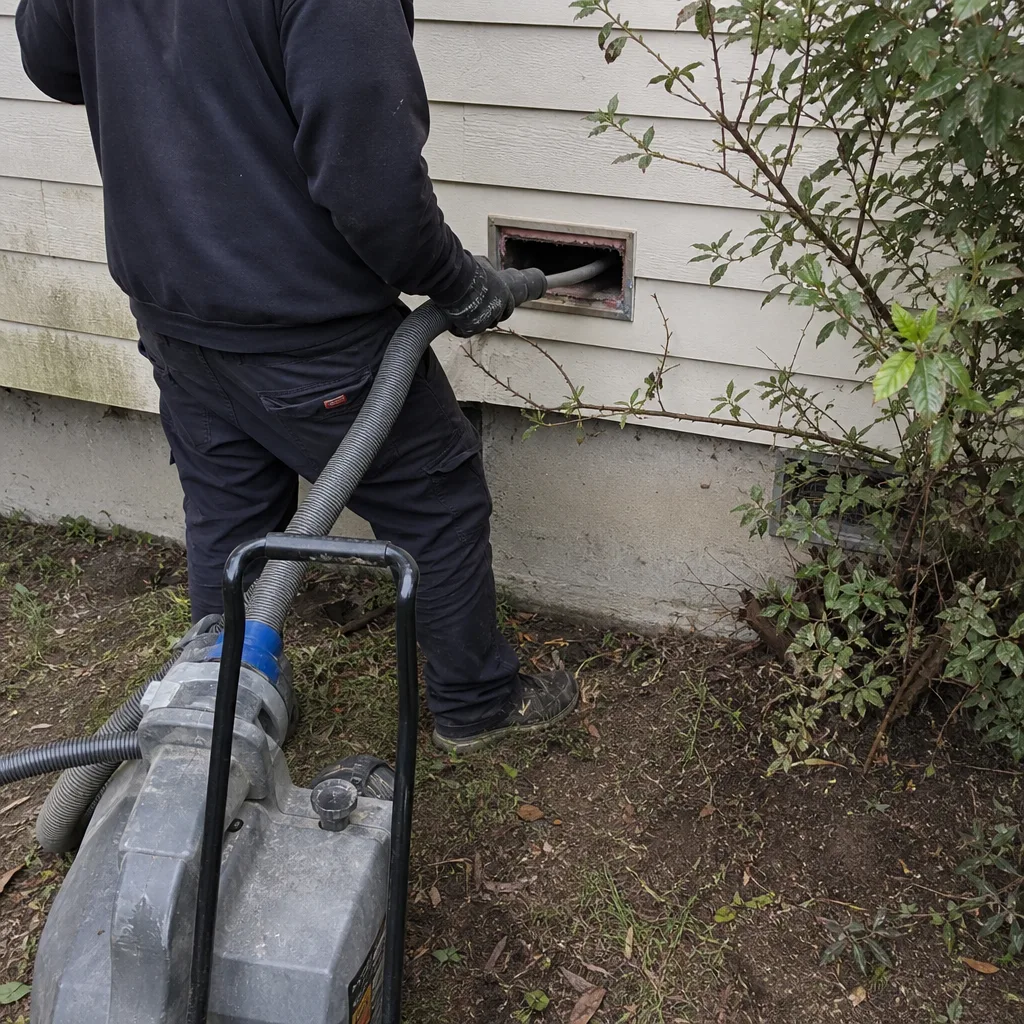 Before
 After
 Before
 After
When to Call a Professional
Call a professional when dust is visibly blowing from registers, when a musty odor comes back after cleaning, when allergies or respiratory symptoms seem to worsen indoors, when the system is pulling more debris than usual, or when an energy bill jump has no other explanation. Call immediately if you smell gas or see a scorched outlet near the system, and treat any electrical panel or wiring issue as a job for a licensed electrician, not a duct tech. The same goes for anything that requires opening a panel or working on the air handler’s electrical side: those are jobs for trained professionals, full stop. For a full-system clean, sealing, or a dryer vent check in Kent, Kent Air Duct Cleaning Co offers free estimates in Kent. Call (877) 792-7319. We answer 24/7. Fast dispatch from 7am to 7pm, Sunday through Friday. Our technicians have up to 8 years of experience, and the local pro we connect you with is licensed and insured as their state requires.
Frequently Asked Questions
For a legitimate full-system clean in Kent in 2026, most homes run $450 to $1,200, with typical properties in the $600 to $900 range. Teaser prices under $250 usually cover supply registers only, not the trunk, returns, or plenums. Call (877) 792-7319 for an exact quote, with the estimate free and the written estimate setting the final price.
A low quote is almost always a partial scope priced per vent, with the trunk line and returns either excluded or pitched as add-ons after the technician arrives. Per-vent pricing is the most common way a cheap quote becomes an expensive invoice. Ask for a component-by-component estimate, and call (877) 792-7319 for a flat per-system quote you can compare line by line.
Ask for before-and-after photos of your own system. A complete job includes photos taken during the visit, plus a written scope that names each component cleaned. Without both, you’re trusting a claim rather than evidence. Call (877) 792-7319 to book an estimate that includes that documentation.
Most Kent homes get by on a clean every 3 to 5 years, with more frequent cleaning if someone in the house has allergies, if pets or recent remodeling are adding debris, or if the system has had a moisture problem. There’s no universal schedule; the evidence from your registers, filter life, and energy bills points to whether it’s due. Call (877) 792-7319 and we’ll talk through whether your system actually needs it.
Sanitizing is necessary when there’s a verified problem such as visible microbial growth, a persistent musty odor that returns after cleaning, or water damage in the system. It’s a valid optional treatment otherwise, and it should be priced and sold as one. Ask the technician what they observed before you approve it, and call (877) 792-7319 with questions.
Yes, and it’s often the sensible way to do it. The air ducts and the dryer vent are separate systems, but cleaning both in one visit addresses air quality and a leading fire-hazard concern together. Call (877) 792-7319 to book a combined estimate. We answer 24/7, and fast dispatch runs from 7am to 7pm, Sunday through Friday.
The Bottom Line
The price you’re quoted for duct cleaning in Kent is worth reading the way you’d read a line-item bid from any other trade: scope first, price second. A legitimate full-system job runs $450 to $1,200, and the written estimate should list the trunk, returns, plenums, and air handler before you sign. One flat price per system, agreed before work starts, is the standard that protects you. Ask for before-and-after photos, ask whether repairs and sealing are needed, and know that sanitizing is a targeted treatment rather than a default. The written estimate sets the final price, so get it in writing, and call the company with the equipment, the components, and the photo record. One call covers your ducts, dryer vent, and air quality system.
Written by the team at Kent Air Duct Cleaning Co.